Q: What is distinguishing between each model year?
A: Camaro:
Firebird:
Q: When was the Camaro Z28 available?
A: 1970 1/2 thru 1974 and 1977 thru 1981.
Q: What Firebird models were available?
A: Base, Esprit, Formula, and Trans Am models were available from 1970 1/2 thru 1981.
Q: What special edition Trans Ams were available?
A: The following special packages were offered:
1976 Limited Edition - 400/455 - black and gold - 15x7" honeycomb rims
(polycast plastic over steel)
Pontiac's 50th anniversary (643 Hurst T-Tops and 1,947 coupes)
1977 Special Edition - 400 - black and gold - 15x7" snowflakes
1978 Special Edition - 400 - black and gold - 15x8" snowflakes
Gold Edition - 400 - gold - 15x8" snowflakes
1979 10th Anniversary - 400 4spd - 2-tone silver - 15x8" turbo rims
Special Edition - 400 4spd - black and gold
- 400 auto
1980 Indy Pace Car - 301 turbo - white - 15x8" turbo rims
Special Edition - 301 turbo - black and gold
1981 NASCAR Recaro T/A - 301 turbo - white/blk roof - 15x8" turbo rims
Special Edition - 301 turbo - black and gold
Q: What is a Firebird Esprit?
A: The Esprit began with the 1970 model. It can be identified by a "T" as the second digit in the VIN. It was placed between the base model and the sporty Formula. The Esprit was the luxury Firebird. It came standard with the custom interior in either cloth or vinyl, simulated wood grain dash, added acoustical insulation, consealed wipers, windshield radio antenna, chrome wheel well trim, vinyl side moulding, and a 3-speed automatic transmission. Other popular options included power locks, power windows, AC, cruise control, tilt steering, remote trunk release, rear window defroster, 8-track tape player, and vinyl top. There were no spoilers, air deflectors or hood scoops on these cars.
In 1977 Pontiac introduced the Skybird, originally to be named after the 1976 show car called Bluebird, but that name was already used by Bluebird Body Company located in Georgia. The Skybird was coded W60. It consisted of a Lombard Blue two-tone paint scheme, coded #21 with an accent code of #58 (Bright Blue) for 1977 and a paint code of #30 (Lombard Blue) and the same accent paint code for 1978. It came with loads of blue stripes and a special "feathery" Skybird decal. Color matched grills, taillight bezels, snowflake 15" x 7" wheels (YJ8), white wall tires (OBW), color matched custom cloth (24B) or custom vinyl (24N) interior, including seatbelts (AK1), Formula steering wheel (NK3) and carpet. The Skybird was available with several engine combos from the Buick 231 V6 to the Olds 403 V8 engine, for smog and high altitude areas. Some of the models may have received a gold spoked steering wheel or Hurst t-tops. Total price for the Skybird package was an extra $342 with cloth interior and $315 with vinyl. In 1978 it was up to $461 with cloth interior and $430 with vinyl.
The Redbird option replaced the Skybird midyear in 1978. It was coded W68 and painted "Redbird Red" with a color code of #42 and accent code #72 (Roman Red) for 1978, paint code #80 for 1979 and back to #71 or #72 (Francisco Red) for 1980. The Redbird option consisted of the same options as the Skybird, except the base color was Red and the stripes were gold. The custom interior was available in vinyl (74N) or cloth (74B). The Redbird option continued until midyear 1980. Some of the 1979 models received the gold steering wheel, dash, and front arrowhead emblem just like the Special Edition Trans Am's. Engines available for 1978 and 1979 were the 3.8 Buick V6 to the Olds 403 V8 powerplant. In 1980, the Redbird was available with the 3.8 Buick V6 to the 5.0 Chevy 305. Total cost for the Redbird package in 1978 was $465 with cloth interior and $430 with vinyl interior. In 1979, it was up to $491 with cloth interior and $449 with vinyl.
In mid-1980 the Yellowbird was introduced. It was the third and last color change for the Firebird Esprit Appearance Packages. The Yellowbirds were coded W73 with a paint color code of #56 with an accent color code of #37. They also consisted of the same options as the Sky/Redbird, including the the Redbird's gold stripes. The Yellowbird came with the camel tan (62B) custom cloth or custom vinyl (62N) interior and had blacked out taillights with yellow horizontal ribs rather than the usual color matched section. Most of the Yellowbirds received the gold steering wheel and dash. The Yellowbirds could also be ordered with an extra-cost rear spoiler (D98) for $58. Total price for the Yellowbird option was $550 with cloth interior and $505 with vinyl interior.
Q: What was the WS6 special performance package?
A: The WS6 package was first officially offered by Pontiac in 1978. Although rumor says that it began in '77 as a mid-year addition. It included:
The lower control arm support is not really on the control arm, but about that area on the curved part of the sub-frame that was on the WS6 cars. This support is small and relatively thin. It is about the size and length of a big pencil connecting frame to frame for the inside of the curve.
Q: What is the DKM Macho T/A?
A: DKM stands for Dennis and Kyle Mecham who worked at their father's Pontiac dealership in Glendale, AZ (Mecham Pontiac). In 1977, DKM started modifying stock Trans Ams which were sold to other Pontiac dealerships around the US. These "Macho T/A's" start out as factory Trans Am with the high performance engine/suspension package and custom cloth interior. The car got special DKM paint, accents, and graphics (including a console plate and MACHO T/A rocker panel and rear spoiler decals). Each car is uniquely numbered on the console plate, front fender, and rear spoiler. A "Plain Jane" version was available with just colored paint accents, no large MACHO T/A on the rocker panel, or Trans Am decals. The "bird" on the hood was either a full-hood style or smaller style (like that of early 70's) on the nose.
Cars could receive 4-speed Borg-Warner or 5-speed Doug Nash transmission. Automatic trannies were reprogrammed for quicker shifts and powered by the Old's 403 ci smog engine. A Hurst shifter and various handles were also available. Available on the engine were Hooker or Headman headers, dual exhaust with crossover, dual cats, and no mufflers. The shaker hood scoop was made functional, and the carb and distributor were rebuilt and tuned to each car. A Rayjay 301E turbo (7 lbs.) option was made available late in '78. The boost gauge was cut into the dash or the console. An aluminum air cleaner sealed against the carburetor to force all the air from the turbo down into the engine. Turbo cars also got TURBO in big letters on the trunk and fenders (in place of the "Trans Am"), a trunk mounted battery, water injection with anti-knock unit, oil pressure restorer, Hurst Competition- Plus shifter, and Goodyear GT radial tires. Only eight are rumored to have been built in '78 and only 22 in '79.
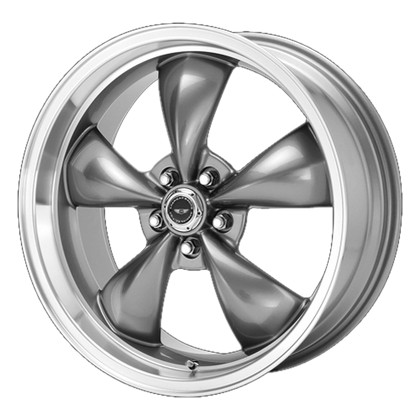
On the suspension, the WS6 package was added (if not originally ordered from the factory). Four wheel disc brakes were an option on the later '78 Macho and became standard with the '79 WS6. Front springs were compressed and retampered making the front 1.5" lower. Koni shocks were also added on all corners. Some cars got a 1" rear swaybar. 8" Monocoque or American Specialty wheels or 9" wheels were all available options with Goodyear radials. Plus any rear gear ratio could be had.
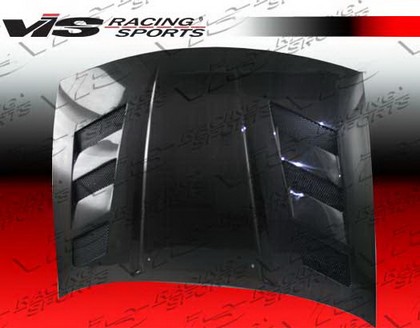
Inside, the dash got a 160 MPH speedo and a 8000+ RPM tach. Audio Mobile, Concord, or your choice of aftermarket AM/FM/Stereo tape player, speakers, and power booster were available. Some Macho's had three dials cut into the console for the sound system. A power moon roof was also an option. Recaro LS or Scheel 410S seats were options and the rear seats could be upholstered to match either the Recaro or Scheel seats. Chrome black, or interior-color keyed roll bars were also available. Outside, a fiberglass lift-off or a lift-off/tilt hood was optional (saving 60 pounds).
When Pontiac dropped the 400 ci (6.6L) engine during 1979, DKM decided to transplant a H-O turbocharged Chevy 350 under the hood. These cars were known as Tallon Super Tourers. Also added were hooker headers, a dual exhaust system, Doug Nash street 5-speed with Hurst linkage, American alloy wheels (15" x 9.5" / 15" x 11") and Perrelli tires, gold Moto-lite steering wheel, matching dash insert, trunk mounted battery, and Macho T/A handling package. Plus the hood, fender flairs, front fenders and air dam were all replaced with fiberglass pieces from American Fiberglass. Power was rated at 457 HP @ 6800 RPM and 410 ft-lbs torque. It's unknown how many Tallons were actually built.
Q: What engines were available for the Camaros?
A: The following lists the displacement (cubic inches), the carburator type and manufacturer, horsepower, torque, and compression ratio:
1970 1/2
Disp Carb HP Torque C/R
307 2bbl Roch 200@4600 300@2400 9.0
350 2bbl Roch 250@4800 345@2800 9.0
350 4bbl Roch 300@4800 380@3200 10.25
350 4bbl Holley 360@6000 380@4000 11.0
402 4bbl Roch 350@5200 415@3400 10.25
402 4bbl Holley 375@5600 415@3600 11.0
1971
Disp Carb HP Torque C/R
307 2bbl Roch 200@4600 300@2400 8.5
350 2bbl Roch 245@4800 350@2800 8.5
350 4bbl Roch 270@4800 360@3200 8.5
350 4bbl Holley 330@5600 360@4000 9.0
402 4bbl Roch 300@4800 400@3200 8.5
1972
Disp Carb HP Torque C/R
307 2bbl Roch 200@4600 230@2400 8.5
350 2bbl Roch 165@4000 280@2400 8.5
350 4bbl Roch 200@4400 300@2800 8.5
350 4bbl Roch 255@5600 280@4000 9.0
402 4bbl Roch 240@4400 345@3200 8.5
1973
Disp Carb HP Torque C/R
307 2bbl Roch 115@4000 205@2000 8.5
350 2bbl Roch 145@4000 255@2400 8.5
350 4bbl Roch 175@4000 270@2400 8.5
350 4bbl Roch 245@5200 280@4000 9.0
1974
Disp Carb HP Torque C/R
350 2bbl Roch 145@3600 250@2200 8.5
350 4bbl Roch 160@3800 245@2400 8.5
350 4bbl Roch 185@4000 270@2600 8.5
350 4bbl Roch 245@5200 280@4000 9.0
1975
Disp Carb HP Torque C/R
350 2bbl Roch 145@3600 250@2200 8.5
350 4bbl Roch 155@3800 245@2400 8.5
1976
Disp Carb HP Torque C/R
305 2bbl Roch 140@3800 245@2000 8.5
350 2bbl Roch 145@3800 250@2200 8.5
350 4bbl Roch 165@3800 260@2400 8.5
1977
Disp Carb HP Torque C/R
305 2bbl Roch 145@3800 245@2400 8.5
350 4bbl Roch 165@3800 260@2400 8.5
1978
Disp Carb HP Torque C/R
305 2bbl Roch 140@3800 240@2000 8.5
350 4bbl Roch 170@3800 270@2400 8.5
1979
Disp Carb HP Torque C/R
305 2bbl Roch 130@3200 245@2000 8.4
350 4bbl Roch 170@3800 270@2400 8.2
1980
Disp Carb HP Torque C/R
267 2bbl Roch 125@3800 215@2400 8.3
305 4bbl Roch 155@3800 260@2800 8.6
350 4bbl Roch 170@3800 270@2400 8.2
Q: How can I improve performance?
A: On the Camaro smallblock, these are suggestions for a mild 300hp 350cui engine with good mileage, intended for daily use.
A good 4bbl carburator is essential. A Q-jet can be reworked for high performance use, or a Holley carb can be used (see later Q in this FAQ). The stock intake manifold is adequete, but a good aluminum manifold will improve performance further. Some examples of good aftermarket manifolds are Edelbrock performer, Weiand action plus and Offenhauser 360. On a late (after 73-74) engine, early cylinder heads will improve performance. A 8.5:1 Compression engine with 76cc heads will get a compression ratio of approx 9.5:1 if earlier 69cc heads are used. 69cc heads can be found on many late 60s and '70-'71 engines.
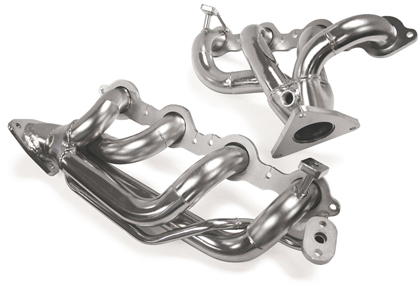
Use a good dual pattern cam (see separate Q later in this FAQ). Use common 4-1 headders with 1 5/8 primaries. True dual exhaust with two separate mufflers will definately improve performance. 2.5 inch pipes are preferred.
Many cars came with tall (low numerical) gears. Changing to a higher numerical gear will improve performance but give higher cruise RPM.
Here is a chart for different rear gears for a car with stock diameter (26.5 inches) tires:
Ratio Rpm @ 60mph
----- -----------
2.41 1900
2.56 2020
2.73 2150
3.08 2430
3.23 2550
3.42 2700
3.55 2800
3.73 2950
4.11 3250
A non lockup automatic transmission will add 100-250 rpm due to torque
converter slippage.
Q: How can I improve my High Energy Ignition (HEI)?
A: HEI (a.k.a. 'large cap' distributor) replaced the older points style distributor (a.k.a. 'small cap' distributor) in 1974. Here are some things you might want to try:
Q: How do I grease the HEI as mentioned above?
A: Do the following steps:
Q: How can I keep my headers from burning the spark plug wires?
A: Moroso and Mr. Gasket make loom kits that route the wires across the top of the valve covers and then drop a pair of plug wires almost straight down between the header tubes. But they only work if you have 90 degree boots on straight plug heads (some angle plug heads have spark plug clearance problems). If you keep the slack in the plug wires to a minimum, the plug wires survive just fine. These kits are especially nice if you have A/C as they allow a fairly tight clearance to the head. You should also use the thickest wires you can find, and a little heat wrap won't hurt either.
Q: What camshaft should I get?
A: The two most important properties of a camshaft is duration and lift. More duration means the power peak will move up in the RPM band. there will be more HP, but you will have to rev more to get it. Also, low end torque will be less so the car will soon feel sluggish, especially if it's an automatic.
Increased lift will increase torque, but will also make the torque curve peakier.
Two common cam profiles for the Chevy 350:
Adv Duration 262/272 (int/exh)
Duration @.050 204/214 (int/exh)
Lift .420/.442 (int/exh)
Centerline 112
This cam will give excellent result on a stock or mild engine. Low numerical
rear gears will work, stock cylinder heads are OK, stock automatic tranny
with stock torque converter etc. A 4bbl carb if preferred. Headders and
dual exhaust optional.
Adv Duration 272/282 (int/exh)
Duration @.050 214/224 (int/exh)
Lift .442/.465 (int/exh)
Centerline 112
This is a more aggressive profile. recommended is 9.0:0 C/R or higher, 4bbl
carb, headders, dual exhaust. The cam will work with a stock converter and
less than 3.00 rear gears, but a 12" converter and greater than 3.00 gears
are recommended.
Q: What's involved in installing/rebuilding a Quadrajet?
A: First start out with Doug Roe's book on Rochester carbs. It's got good advice and plenty of pictures on assembling and disassembling which should reviewed if you've never disassembled one. You might even want to take some pictures or video or make some sketches before starting to know how to put everything back together. Also make notes while you work. Take the carb apart and reassemble it at least once without using the Quadrajet kit so you can get comfortable with it.
You'll need to measure the float level. First, make sure you remove all of the air horn screws including the two centers and remove the air horn. Then holding the carb from the top, use your index finger to hold the D-clip in place. Pick the carb up and invert it with your finger keeping the D-clip in place while gravity causes the float to fall and pivot about the D-clip. When the end of the float arm either contacts the rotary valve (Tomco kits) or the viton-tipped needle seats itself (make sure the needle is correctly clipped to the float arm), the float will stop falling. Measure the vertical distance between the end of the top of the float and the bowl casting. This is easier to do than pressing down on the D-clip with one finger, and using another finger to press on the float arm to raise the float, and using your other hand to measure the float level. When measuring, don't try to use a tape measure or regular ruler. Get some "carb feet" instead.
The secondary air valve tension screw is not threaded into the air horn, so do not try to remove it. Also, don't worry about removing the choke plate or secondary air valve plates unless you absolutely have to. The screws that hold them in are wider on the leading end. If you try to remove them without filing that end down, you may break them off.
While it's disassembled, it's a good idea to give the parts a good cleaning to remove the varnish and other deposits left by the gasoline. Pick up some industrial strength carb cleaner preferrably in a gallon can as the smaller cans are usually too small to dip the parts in. Don't use the cleaner on any of the rubber or plastic parts or any of the vacuum diaphragms as it will destroy them. Also remove the seal on the choke shaft before you clean the body (don't use cleaner on it either). Clean those parts with a soft brush. You can also let the metal parts sit in lacquer thinner overnight to get them clean. Make sure you wear eye protection with any cleaner.
When you do get everything clean, blow out all your passages with compressed air to ensure they are are clean. Make sure you do this outdoors with eye protection as you'll be blowing caustic cleaning chemicals and small bits of metal and dirt everywhere.
Be careful placing the top back over the bowl so that the secondary metering rods go in. During disassembly be sure to get all the screws and covers out of the bottom of the bowl and any little ball bearing valves out of the holes they cover.
Don't forget to remove the accelerator pump lever by using a small diameter punch to push the split pin back toward the air horn. Punch the pin back just enough to clear the lever. Put something like a hacksaw blade or the blade of a small screwdriver between the pin and the horn so the pin doesn't go all the way back. Otherwise, you'll have some big problmes trying to push the pin back into place when it's time to reinstall the lever.
Q: How can I decode the Quadrajet carbs?
A: Look for a number starting with a '70' or a '170', followed by 5 other digits (wwxyz) where 'ww' is:
Q: How do I select the right aftermarket carb?
A: Here are some guidelines for the most common aftermarket carb - the Holley 4150 and 4160.
The capacity for the carb is specified in CFM, Cubic Feet per Minute:
Stock or mild
engine less than 1hp/cui
--------------------------------
Chevy 305 600 cfm
Chevy 350 600 - 650 cfm
Chevy 396 650 - 750 cfm
Pontiac ??????
For street use, vacuum operated secondaries are recommended.
Q: What is the advantage of a 2-piece timing chain cover?
A: A 2-piece cover lets you make timing and cam changes without disturbing the front seal. The back part has the seal lip built in and it goes on first. The front part goes on and it covers the timing set and can be removed and installed without affecting the front seal. That means you don't have to screw around with the oil pan.
Q: When was the last year for the big-block?
A: For the Camaro, the 396 big block was available until and including 1972. The Firebird had the 455 until and including 1976. There were multiple versions available with widely varying hosrepower ratings. The Super Duty (SD-455) version was only available in 1973 and 1974 in the Formula and the Trans Am. The 1974 SD had a rating of 290hp and 395 lbs/ft of torque (believed to be quite conservative for EPA purposes). In 1975 and 1976, a more run of the mill version of the 455 was offered with a measly 200hp. Compression during those two years was a power sapping 7.6 to 1. Since Pontiac used the same block for all their engines (except the 301), they're not really considered big or small blocks.
Q: Were there "big block" and "small block" Pontiac engines?
A: No. The real Pontiac engines (326-455) differed in bore and stroke, but had the same exterior demensions. The 326, 350, 389, & 400 were "small journal" engines with a 3.00" main bearing journal diameter while the 421, 428, and 455 were "big journal" engines with a 3.25" main bearing journal diameter. The sure way to tell which one a car has is by looking at the raised numbers on the right, front of the engine which show the cubic inch measurement.
All heads from these engines can be interchanged. The only thing to be careful of, is the use of high-lift cams or large-ratio rockers. Be sure to check for valve-piston and valve-sidewall clearance. You might have to notch the top of the cylinder wall for clearance. Compression ratio can be modified by swapping heads since they're all compatible.
The '77 & later thin wall casting 265 and 301 V8's are known as "low deck" blocks. They are similar in appearance to the 326-455 motors except for the flat, scrawny 4 runnered intake manifold and lower surrounding block area. The 301's weight is comparable to the Buick 231 V6.
Q: What years was the Pontiac 455 available?
A: Although some sources say the 455 was available in 1970, it officially made its debut in 1971. Pontiac was keeping up with the Joneses as everybody else was running 450+ cubes, so they had to. The only problem was the early 455 was a relatively tame engine. Although it had 500 ft-lbs of torque at 2700 RPM and 360 HP at 4300 RPM (gross ratings), these revs were much too low for real performance. All the real performance remained in the form of the Ram Air III and IV 400 ci engines. They had power and they revved. The 455's 1/4 mile times were in the low to mid 15s at 95 MPH, while the Ram Air 400's were pulling low to mid 14 second times at 100 MPH. But for the non- racer-types, it was a deal. An H.O. version was also available on the Trans Am with some performance gains over the standard 455. It wasn't until 1973 when the 455 SD (Super Duty) came around (see details below) where the 455 really shined. The 455 remained through 1976, however like the early ones, after 1974, they were low on performance again due to the various economical (the energy crisis and GM bean counters) and ecological (tree huggers and the EPA) factors.
Q: What is the the best cam for my Pontiac 455?
A: The "041" Ram Air IV cam w/ 1.5:1 rockers is widely considered to be "THE" cam to have in a street driven Pontiac. It was the first "computer designed" Pontiac cam in 1969, and Edelbrock validated this profile by copying it after extensive testing for their RPM cam some 20 years later. It has alot of low end torque and will still rip your head off in the midrange. It has a lopey idle at 550 - 600 RPM, but still has enough vacuum for the power brakes. And if .470 lift isn't enough, a set of 1.65 rockers will put you at .517. Competion Cams also has a RA IV grind in the "Muscle Car Cams" section of their catalog. This is probably the best until someone comes up with a hydraulic roller.
The three digit numbering scheme is nothing more than the last three digits of the actual part number. Hence the "041" really type "T" as mentioned in the previous question. Stock, the 455 manual cars used the 068 cam and the automatic cars used the 067 cam.
Q: Is there a fuel injection manifold available for my 455?
A: Edelbrock and Accel have multi-port fuel injection (MPFI) systems, however the Accel must be tuned with a laptop PC. These are quite expensive though.
Force Fuel Engineering in Florida can handle a conversion if you send them your manifold. They recommend an open plenum manifold, but they can do 180 degree manifolds, too.
Q: How was the 455 engine different from the Super Duty version?
A: The Super Duty engine had the following:
Q: How can I tell if a Super Duty 455 engine is genuine or not?
A: The Super Duty (SD) 455 was offered by Pontiac in 1973 and 1974. The fifth digit/letter of the vehicle identification number is an 'X'. A 1973 SD block is stamped on front right (passenger) side with either 'Z8' (manual) or 'X8' (automatic). The 1974 blocks are stamped with 'W8' (manual) or 'Y8' (automatic). The heads have a casting of '16'. Be careful, the 1968 heads were also casted with a 16 but the chamber volume is 72cc (D-port) vs. 111cc (round port) for the SD. Also, the SD 4 barrel iron intake casting numbers are 494405 or 494419 (1973) and 495107 (1974). An aluminum version (casting 485640) was designed, but didn't make it into production.
Q: What is a Ram Air V engine?
A: The Tunnel Port Ram Air V engine had the potential for unseating the top dog Chevy. Unfortunately, very few of these engines ever reached the public. It was only briefly offered as a crate engine through Pontiac dealers in the early 70's.
The Ram Air V could have put Pontiac into the big time at the track. Their Special Projects Group had developed 3 versions of the Ram Air V by 1968: a 303-cid intended for use in the SCCA Trans-Am series, a 366-cid intended for NASCAR competition, and a 400-cid for street/strip use. Conservative corporate attitudes and small budgets killed the 303 version. The 366 version was used in some of the smaller NASCAR divisions, but never made it to the Grand National circuit. But the 400 version would be the closest to making it under the hoods of the GTOs and Trans Ams. Although it never became an official option, people with some inside knowledge could have got a Ram Air V 400 for $2000 in their 1970 1/2 Trans Am. It's believed about 200 of these engines were sold, but many made their way into GTOs and other Pontiacs, as well as others being delivered by crate. But corporate HQ would ultimately cave in to safety-conscious legislators and insurance companies. Thus the Ram Air V was deemed powerful for street use and soon disappeared. The Ram Air 400 was designed with tunnel port heads, manifolding and a solid lifter cam. While this engine utilizes a basic 400 Pontiac block, there are some bonus points worth noting.
The main-bearing web areas are beefed, with four bolt main caps and a strengthening rib down the right side similar to the 455 SD block, also similar are strengthening ribs in the lifter gallery. A forged steel (SAE 4615) crank was used and was cross-drilled for superior lube qualities. The rods were a radical new design forged from SAE 4340 material and specially braced in the beam and cap areas. They tapered from the small-end to a point almost as wide as the big-end opening and used an aircraft-style 12 point bolt that passed through the cap and threaded directly into the rod.
For a piston choice, Pontiac went to a TRW forging, similar in design to the one Chevrolet was using in the 302 (Z-28) Camaro. The pop-up configuration is different however, for an approximate 11:1 compression ratio. The forgings were of cam-ground slipper design with a tin-plated exterior. The tin-plateing can be removed, however. At the top there is a 3/32 moly-coated ring, followed by the conventional Pontiac setup.
Back then the magic word in performance was tunnel-port as demonstrated by the killer 427 Fords, big-block Chevys and Hemis. Pontiac's version of this design sported machined combustion chambers free of any rough areas that might cause hot-spots and huge, tennis-ball sized ports. The intake ports are slightly oval in shape at the head manifold area then flow into a circular shape for a direct shot at the center-line of the pistons. The valves are chrome-plated, hollow-stemmed, tulip-shaped affairs, measuring 2.19 inches at the intake and 1.77 at the exhaust. They're super-light which contributes to the revability of the engine. The pushrods pass directly through the center of the intake ports similar to the 455 SD, however, instead of the round tube as on the SD, the Ram Air V head employs a wide, tapered airfoil to direct air-flow around it. Overall flow was said to be extremely good due to the lack of low-pressure buildup under the valves.
When it came to the cam the engineers combined the best of two worlds. They chose the timing specifications of the successful Mark IV Ram Air cam (308 degrees intake duration, 320 degrees exhaust duration, .520 inch lift at zero lash) but added solid lifters for faultless super-high-rpm operation. This is extremely important because of the design of the intake manifold and the huge tunnel ports. This is a *high* rpm engine.
Pontiac put the old boggy QuadraJet to rest as far as the Ram Air V was concerned in favor of the 800 CFM Holley. You have to come off the line hard as the engine doesn't start to make power until 4000 rpm and the manifold is tuned for max power from 5000 rpm and up. I have seen pictures of two styles of cast-iron exhaust headers with the spread-port R.A. V pattern. One design is similar to the Ram Air III D-Port manifolds and the other is a "shorty" version with heat shields.
There were never any specific horsepower and torque output figures available on the R.A. V or the 303 version (designed by Traco). Speculation was 1.15 HP per cubic inch on the Mark V in the dyno room which should work out to something like 375 to 390 advertised horsepower. Other published claims put the 303 SCCA version up at 430 hp, the 366 NASCAR version at 585 hp, and the 400 street version as high as 500 hp. No one knows for sure. But while seeing such a beast with a Ram Air V was, and is now even more so, a rare sight - it wasn't difficult to get these cars into the 12-second range with some simple tricks and slicks.
Q: How did the standard 400 and T/A 400 differ from 1977 - 1979?
A: The standard 400 (L78) had 180 HP and 325 lb/ft torque. But the T/A, also had the following engine options:
1977 T/A 400 (W72/L78) - 200 HP
Better power curve
Different camshaft
Higher compression ratio (96cc 6X heads down from 101cc) 8.1:1 from 7.7
Carburetor recalibration
Different spark advance curve
Low backpressure muffler
1978 T/A 400 (W72) - 220 HP and 320 lb/ft torque
Different camshaft
More agressive spark advance curve
Windage tray
Dual resonator exhaust with single catalytic converter
1979 T/A 400 (W72) - 220 HP
1978 shelf motor - only available with 4 speed, 2485 made
The standard 400's had a decal callout, when present, of "6.6 Litre" while
the T/A 400's had a decal callout, when present, of "T/A 6.6". The T/A 400
also had chrome valve covers.
Q: What are the best techniques for building up a 400?
A: Rick Ciaccio (mesa2@ix.netcom.com) offers the following recipe for a street strip Pontiac 400 that, if built properly, will make 450+ HP with commonly available parts:
BLOCK:
Start by boring the block .060 to get max cubes (413), hone to a #625 Sunnen
finish with .003 piston clearance and minimum deck it. Leave, or add the
scallops at the intake valve side of the bore to unshroud the valve. Make
sure the main bearing saddle alignment is + -.001 or better. A 2 bolt block
is OK providing you use studs. Remove *all* the casting flash in the lifter
valley and re-tap/deburr the whole block. Don't forget to tap the oil
galleries for threaded plugs, drill an .042 hole in the right rear plug for
dist gear cooling and chamfer the oil filter block and oil pump holes nice
and big. Take your rotary file and elongate the oil return hole in the front
of the block down to the valley floor for immediate drainage to the pan,
there are others along the sides between the lifters if you feel energetic.
Do *not* scrimp and try to save money on the block! You get what you pay
for so use a competent machine shop!
When cleaning your freshly-machined block for assembly use *hot* water and dish soap, a steel rifle-cleaning rod will work great for the oil passages, a 12 gauge shotgun brush for the lifter galleries and a 9mm for all others. After cleaning soak the block with WD-40, wipe the cylinders. You will see more blackness on your *paper towls*. Clean again with soap and hot water using a pressure nozzle. If you have an air compressor, blow dry the block and coat the cylinders immediately with oil.
CRANK:
Note: see the 455 instructions for info on stroking your 400 to 468 inches.
Remember that head cc choice will be affected.
Get an early 350 crank, have it magnafluxed for cracks, heat treated (case hardened), shot-peened and straightened. Grind it -.010 on the mains, offset grind the rod journals .015 (more stroke). You'll need to go .020 undersize to get the offset. Cross-drill the crank and lightly chamfer the rod oil- holes, chamfer the main oil-holes in a tear-drop shape in the direction of rotation, just a small chamfer will do. Micro polish it, since it is heat- treated it will polish nicely. Run .002 clearance on the mains.
The reason for using the 350 crank is that it is lighter and has thinner crank throws. You can also use a late 400 crank as it is a similar casting. Avoid very late 400 cranks as they have a different flange. The lighter crank will reduce your rotating weight and rev faster under load. If you anticipate super-high rpm, you may want to "knife-edge" the crank for even less weight and less resistance.
Before installing the crank, clean it just as you did the block. They are covered with powdered metal and abrasives after grinding.
To use this crank you must also do the following:
PISTONS:
This is an area that I will hold back on the tricks slightly. If you *must*
know more, private e-mail will do. You will have to reduce the weight of
the *forged* 400 pistons, you can machine some off the back-side of the dome
or machine or drill holes in the pin boss area from the bottom. Another way
is to use thin walled tool steel pins, they are fairly inexpensive. Use moly
filled rings *only* with the Sunnen #625 finish. Ring end-gap is .014 top
and .018 2nd.
RODS:
You *must* upgrade your rods to at least the '73 - '74 SD or preferably
Carrillo, Crower, or any other reputable racing rod as you will be revving
this thing to 7000+ rpm easily. If you use factory rods you will have to
remove most of the small-end pad to get it light enough to balance correctly
with the 350 crank. Run .002-.0025 clearance. If you can afford it, use
racing bearings. Grooved uppers on the crank. Torque rods by stretch to
+.005 to .008.
OIL PUMP:
Use a Milodon 455 H.O. pump and tack-weld the pickup in place. I suggest
removing the cover-plate phillips srews, loctite them and use an impact-
driver to re-install them.
WINDAGE TRAY:
The stock '65-'73 Pontiac 4/5 windage tray will work fine, if you can find a
full-length one use it. Take a cut-off disk and cut 2 square openings in the
end troughs and 1 long slot in the bottom-center trough of the tray. Note
the position of the end-pairs of rods above the tray, cut your square end-
slots exactly below them. The two end slots should measure about 2.5" x 2.5"
and the center slot 2.5" x approx. 8". When you make your end cuts on each
slot, continue 1/4" past the side cuts. This will allow you to bend a flange
downward along both sides. You can set the tray on the edge of something and
tap the flange down with a hammer, the metal is very soft so it bends
easily. Find a piece of course perforated or expanded metal, cut it to size
and form the same radius as the tray. Tack weld the 3 pieces in between the
flanges and on the ends. This modification will allow oil escaping from the
crank to be blown directly into the pan and keep oil from splashing up onto
the spinning crank. Its good for 10-15 HP.
CAM:
Call Bob Cook at Competition Cams and go over your proposed setup with him.
He is very experienced with Pontiacs and helps many a racer with the proper
cam, etc. He is *realistic* so be prepared, he won't let you over-cam your
engine, no matter how nasty you want it. His # is 800 999-0853.
HEADS:
Any big valve, early Pontiac head will work as long as it has 2.11" int and
1.77" exh valves and screwed-in rocker studs. Exceptional D-port heads would
be 16, 12, 13, 62 and 48. The 62's and 16's should be fairly easy to find.
These heads have 72cc chambers and should yield a 9.7-10:1 compression ratio
which will allow you to run a fairly radical cam effectively.
Heads, more than anything are an area that will determine how much hp your engine makes. If your cores are rusty, remove the freeze-plugs and have them acid-dipped. Start by installing new bronze guides and hardened exhaust valve seats for use with unleaded gas. Since the seats will have to be blended into the port, now is a good time to do some porting.
On a street engine, do *not* fully port the heads! You want some turbulence in the port to keep the fuel/air mixture atomized, thus keeping your engine from loading up. The best street port-job that will wake-up your Pontiac is simply to open up the "bowl" area under the valve and blend back into the port-runner. Try and keep each port relatively close in volume, don't get carried away removing material! Just blend the seat into the bowl/runner and polish. Use some "Dykem" machinist's dye, or if not available use spray paint around the intake ports. Install an intake gasket and snap the plastic locators in place. Scribe a line on the head where the ports are mis-matched and open them up with a *large-diameter* rotary file and blend 3/4"-1" into the port. Leave the gasket on during this procedure (taped down & numbered) to ensure a perfect match.
Minimum mill the heads if necessary and do a good multi-angle valve job. The spring umbrellas can be discarded, make sure you use spring dampners to reduce friction and heat build-up in them. If possible find a 1 piece intake valve for peace of mind. At present I'm not aware of anyone making a 1 piece exhaust valve for a Pontiac.
A good valve cover to use is a late baffled cover. You can spot them in the boneyard by the "8" dimpled spot welds on the surface. These covers have "fingers" that channel oil onto the rocker-balls. The next-best would be the bolt-on baffles that came on the 455 H.O. and the like. Poly-Locks would interfere with these however, you would have to use lock-nuts and hardened washers.
Do not use factory head gaskets, they are too thick and will add several cc's to your chamber volume. Do use head studs if you can afford them, especially if you are planning to run nitrous.
INTAKE MANIFOLD:
Use a torker or preferably, a Doug Nash. I have a friend who has a couple
of them and a 750 Holley with what ever thickness carb-spacer your hood will
allow. Third choice would be a gasket-matched early stock manifold with the
#7 runner opened up to relieve the throttle bracket bolt-boss protruding
into the port, with this manifold use a Holley 750 CFM Spreadbore (see details
on installing this carb in the 455 instructions).
IGNITION:
Run an MSD #8563 distributor, 6AL box #6420, Blaster coil #8202 and Soft
Touch Rev Control #8738 (or 2 Step Rev Control #8739). Use the biggest plug-
wires you can find and stock heat-range AC plugs gapped at .035. Experiment
with the plugs in each hole while the heads are off to get the electrode
pointing down toward the piston on as many as possible (or you can mark the
plugs for later installation).
Timing curves vary with each application, a general rule is to keep it at 34-38 degrees total and don't get wild on the street regardless of what you've read in the magazines. Getting it "all in" by 1800 rpm will only rattle and ping. Keep that figure at around 4000 rpm unless you cut your gas with toluene or racing fuel.
HEADERS:
If you can find a decent set of 4-tube headers that aren't a nightmare to
install and maintain use them. I recommend 3-tube "Tri-Y" headers because of
their ease of installation and room, they will also make lots of torque at a
very low rpm. Always use a cross-over tube on the way back to the mufflers
and slightly smaller tube at the muffler exit. Note that some heads will
require the end exhaust ports to be drilled and tapped for header bolts.
FLYWHEEL & BALANCING:
If you run a 4-speed use a neutral aluminum flywheel and internally balance
the engine. That will give you a softer launch without a lot of tire spin
and will rev quicker. The stock Pontiac dampner works fine. It is a waste
of money to replace it. Just make *sure* you torque it to 160 ft. lbs.
NITROUS:
It is better to build a "hot" engine and add mild nitrous, than to build a
mediocre engine and cram it with the "happy juice" trying to make power.
The result will surely be a pile of scrap iron, empty wallet and a severely
bruised ego.
These are the basics as I see it that will give you an 11 sec car provided you have the chassis for it. If you run slicks, the right gears (4.33-4.88) and a race-prepared TH350 and have the chassis extremely dialed in, I would put $$$ on a 10 sec run. All this costs plenty of $$$, but take your time and shop for prices, it will be worth it. This info is based on my many years of building Pontiac engines.
Q: What are the best techniques for building up a 455?
A: Rick Ciaccio (mesa2@ix.netcom.com) offers the following recipe for a street strip Pontiac 450. The basic engine building technique for the 455 is similar to the 400 with the basic differences being in the head selection and rod choice. So follow the 400 instructions when rebuilding a 455 with the exception of the following:
CRANK:
Only a 421-455 crank can be used in a 455 block due to the large 3.25" main
journals. Prepare your 455 crank as described in the 400 primer only
disregard the stroking procedure. A 400 can be stroked to 468 inches with an
.060 overbore and a modified 455 crank. These finished cranks are available
from Bruce Fulper at Rock & Roll Engineering in Grand Terrace, CA. The
cranks have the mains turned down to 3.0" and the thrust bearing surface
welded and machined to 400 specs. They have proven to be very reliable and
with the decreased bearing speed of the smaller journal they are a good
choice instead of going with a 455. The only modifications to the block are
a notch in each cylinder to clear the rod bolt.
Always heat-treat a Pontiac crank, they are cast from tough nodular iron but after grinding they are *very* soft and won't take much abuse. Follow the 400 instructions for crank tips. There is nothing different about preparing a 455 crank, but note that they are already crossdrilled from the factory. Always use a grooved top main bearing.
RODS:
Good rods are a *must* in a 455, don't even think of anything over 5200 rpm
with stock, cast 5/16" rods. The good '58-'62 forged rods with good bolts
are a better choice but require heat-treating to get up to the required
minimum hardness of 25 Rockwell C. These rods also had quirky production
runs. It's hard to tell what they really are, best to avoid them unless
you're sure. The '73-'74 SD rods are first choice but *very* expensive.
Last I heard they had gone up to $135 each new. A set of Carrillo, Crower
or other racing rod is recommended instead at about $900 per set. Rods are
an area you don't want to compromise, you'll always grit your teeth when you
stomp on it if you do.
HEADS:
The only difference required here is the chamber size, keep the chamber at
about 95cc minimum for the street. There really is not that much to be
gained from higher compression except that you can run a hotter cam (which
narrows the power band). 95cc will yield approx 9:2.1 compression, it makes
little sense to go higher on a street engine.
Your choice is fairly limited without major mods. Good 455 heads are the #96's with a 95cc chamber; 7K3's at 96cc; 66's at 114cc (although this head uses pressed-in studs it is big-valve and can be milled for compression and tapped for srew-in studs); 197 & 7F6 round port 455 H.O.'s at 111cc.
The 1970 GTO 455 #64 head has an 87cc chamber and was the only high compression head offered for the 455. They are a great choice if you want a more radically cammed and curved street-engine and don't mind cutting your gas with toluene or racing fuel.
Best choice would be the #96 head. The 7K3's do not have a flange on the end exhaust ports for headers. The H.O. round port heads need the end exhaust port flanges drilled and tapped for header bolts.
Prepare your 455 heads as described in the 400 instructions.
OILING:
The large crank journals on the 421-455 require a large volume of oil.
Always use the proper oil pump, a 60-80 psi high-volume unit. Milodon makes
an excellent Pontiac pump at around $40 which puts out incredible volume,
even at low rpm.
A baffled pan is a good idea in any race engine but especially in a 455. Under hard acceleration the oil will climb the back of the pan and rush forward under deceleration. A simple and inexpensive cure is to cut two 1.5" wide pieces of 18 gauge or thicker sheet-metal, shape and radius the corners to fit along the back of the pan between the sides and at the front where it rolls up and forward. At the front you must cut a few 3/8" channels along the edge to allow oil to readily return to the sump, weld the piece horizontally in place in the center of the rolled section to form a rearward lip, tack-weld it between the channels also. Weld the rear baffle in the same fashion to the back of the pan the same height as the front to form a forward-facing lip. Pay close attention to the position of the oil pump during this procedure to avoid interference. These simple baffles will help keep the oil in the bottom of the pan.
INTAKE MANIFOLD & CARB:
The same manifold setup as described in the 400 primer will work well on the
455. Since the 455 has a longer stroke it requires more air flow, thus
emphasis on porting and induction system become more crucial. An 800 CFM
carb is a good street strip choice. The Holley 6910 Spreadbore is the direct
replacement for the QuadraJet, however they are hard to find and due to low
demand Holley may stop producing this carb. The next choice would be the
6213 designed for the BB Chevys. Both carbs have center float bowls and are
dual feed.
There are several modifications needed to use the Chevy carb on your Pontiac manifold, they are as follows:
1) You must remove the PCV nipple from the top of the manifold, cut an allen head 1/8" pipe plug in half (a real hassle) so it sits flush and plug the hole to clear the carb float bowl, use the nipple exiting the front of the carb for the PCV.
2) There is a loctited plug in the vacuum manifold nipple at the rear of the carb base which must be removed, unfortunately it is very soft and will probably be ruined before it comes out. An easy-out will not grab so the only alternative is to drill the plug out. Start with a small bit making sure it is centered and work your way up. An easy way to get around having to tap it for a Pontiac manifold is to cut a short piece of 3/8" copper tubing, rought half of it up with some coarse sandpaper and epoxy it into the carb nipple (do not use 5 min epoxy), slip on a short piece of 3/8" hose and shove the proper plastic manifold into it, Pep-Boys has a good selection of manifolds.
3) The 6213 carb is a divorced choke style, you will have to bend a section of rod extending from the manifold stove to the choke linkage. I have scavenged many rods from junkyard cars, they are soft and are easily bent to shape, after cutting to size take a pair of dykes and rotate them around the end of the rod, that will give you a groove for the retainer clip.
4) The stock Firebird throttle cable is 1" too short, you can either buy a Camaro cable or use an extension. A reliable extension is an old Ford-type threaded-rod linkage end with a ball stud in it (available at Pep-Boys). Cut a vertical slot in the threaded end wide enough that the flat cable end will slide freely between, drill a hole from the side and tap it. Insert the cable and after loctiting the screw, insert it through the cable-eye. You may have to tweak your throttle-cable bracket some to align everything, an early bracket works best, they are higher and give a better angle for the return spring. You will need a stout spring on the linkage otherwise.
5) Your Q-Jet air cleaner will not fit the Holley, a Chevy or aftermarket cleaner will have to be used instead.
The Holley carb will absolutely wake up your Pontiac! They respond instantly and are dialed in easily.
CAM:
Refer to the info provided in the 400 instructions on cams, however remember
that the 455 is a mid-range monster. When selecting your cam, unless you
have made major racing modifications to the short-block keep your RPM
ceiling at 6000 when selecting cam duration.
REAR END GEARS:
It makes little sense with the torque of the 455 to use 4.xx gears, best 1/4
mile times would be with gears in the 3.42-3.90 range.
Q: What rearends were available for the Camaros?
A: The following lists the ratios that were available (with O=open and P=posi):
1970 1/2
2.56p, 2.56o, 2.73p, 2.73o, 3.07o, 3.07p, 3.08p, 3.08o, 3.31o, 3.31p,
3.36p, 3.36o, 3.55o, 3.55p, 3.73o, 3.73p, 4.10o
1971
2.73o, 3.08o, 3.08p, 3.36o, 3.36p, 3.42o, 3.55p
1972
2.73o, 3.08p, 3.08o, 3.36p, 3.36o, 3.42o, 3.55p
1973
2.73o, 3.08p, 3.08o, 3.36p, 3.36o, 3.42p, 3.42o, 3.55p
1974
2.73o, 3.08p, 3.08o, 3.36p, 3.36o, 3.42p, 3.42o, 3.55p
1975
2.56o, 2.56p, 2.73o, 2.73p, 3.08o, 3.08p, 3.42o, 3.42p
1976
2.73o, 2.73p, 3.08o, 3.08p
1977
2.56o, 2.56p, 2.73o, 2.73p, 3.08o, 3.08p
1978
2.41o, 2.41p, 2.73o, 2.73p, 3.08o, 3.08p, 3.23o, 3.23p, 3.42o, 3.42p,
3.73o, 3.73p
1979
2.41, 2.73, 3.08, 3.42, 3.73
1980
2.41, 2.56, 2.73, 3.08, 3.42, 3.73
1981
2.41, 2.56, 2.73, 3.08, 3.23, 3.42, 3.73
Q: What rearends were available for the Firebird?
A: The following lists the ratios that were available (with O=open and P=posi):
1971
2.73o (GZG), 2.73p (CAG), 3.08o (GXG), 3.08p (GYG), 3.42o (CKG),
3.42p (CJG), 3.73p (CGG), 4.10p (CBG)
1972
2.73o (GZG), 2.73p (CAG), 3.08o (GXG), 3.08p (GYG), 3.42o (CKG),
3.42p (CJG), 3.73p (CGG)
1973
2.73o (GZG), 2.73p (CAG), 3.08o (GXG), 3.08p (GYG), 3.42o (CLG),
3.42p (CMG)
1974
2.73o (GZG), 2.73p (CAG), 3.08o (GXG), 3.08p (GYG), 3.42o (CLG),
3.42p (CMG)
1975
2.56o (PGG), 2.56p (PTG), 2.73o (PAG), 2.73p (PUG), 3.08o (PCG),
3.08p (PWG)
1976
2.41o (PJG), 2.41p (PSG), 2.73o (PAG), 2.73p (PUG), 3.08o (PCG),
3.08p (PWG), 3.23p (LDG)
1977
2.41o (PJG), 2.41p (PSG), 2.56o (PHG), 2.56p (PTG), 3.08o (PCG),
3.08p (PWG), 3.23o (PDG), 3.23p (PXG)
1978
2.41o (2PJG), 2.41p (2PSG), 2.56o (2PHG), 2.56p (2PTG), 3.08o (2PCG),
3.08p (2PWG), 3.23o (2PDG), 3.23p (2PXG), 3.42o (2PEG), 3.42p (2PYG)
1979
2.41o (2PJG), 2.41p (2PSG), 2.56o (2PHG), 2.56p (2PTG), 3.08o (2PCG),
3.08p (2PWG), 3.23o (2PDG), 3.23p (2PXG), 3.32p (2PPG), 3.42o (2PEG),
3.42p (2PYG), 3.42p (2POG)
1980
2.41o (2PJG), 2.41p (2PSG), 2.41p (5PVG), 2.56o (2PHG), 2.56p (2PTG),
3.08o (2PCG), 3.08p (2PWG), 3.23o (2PDG), 3.23p (2PXG), 3.32p (5PQG),
3.42o (2PEG), 3.42p (2PYG), 3.42p (5PMG)
Q: How can I adjust my speedometer after swapping rear gears?
A: The changes to the speedo gears depend on what kind of speedo gears you have now. There are two gears in the tranny (on the output shaft) that drive the speedo. First, there is a gear mounted on the output shaft, called the speedo "drive" gear. Then, there is a second gear that is mounted as an extension to the speedo cable, called the speedo "driven" gear. The driven gear is extremely easy to replace. The drive gear is a little more of a hassle, but no big deal. You will have to remove the tail shaft section on the tranny as well as the driveshaft for the drive gear. To replace the driven gear, you just remove a single bolt and pull out the speedo cable with gear.
If the driven gear you have now is on the low portion of the range (i.e. a few teeth) it may be sufficient to just replace the driven gear. The driven gear for the TH350 come in sizes up to 25 teeth. That means your current gear has to have a maximum of 20 teeth for a 3.23 or 18 teeth for a 3.55 rear gear. If you already have more than that on your current driven gear, you will have to replace the drive gear.
Q: How can I improve handling?
A: A key in cornering ability is the possibility to have small or even negative camber alignments. But less camber means more shims on the upper A-arm. It often turns out that too many shims are required to get a desired alignment. The solution has been to buy an expensive tubular A-arm that is shorter than stock.
Well, TRW had a brain-storm and released a custom offset upper A-arm shaft. This shaft is cheap, and can be installed two ways: One that gives you stock alignment, and the other gives approximately 1 degree less camber. Ideal for most street driven cars that want better handling. The shaft comes complete with nuts, brackets, and bushings. This is actually a Moog part (K6146) which sells for around $50. Call the TRW help line (1-800-237-9090) for more information.
Here are some low-buck suggestions for the Camaro. Some of them can be used on the Firebird:
Min Max
----- -----
Camber -3/4 0 dgr
Caster +3 +5 dgr
Toe in 0 3/32 inch
Here's what Markus Strobl (etxmst@sta.ericsson.se) did:
> My car is a type LT. That means it did not have the stiffer Z28 springs
> but it did have a rear 5/16" sway bar. Stock is also a 1" front sway
> bar, multi leaf springs in the rear and a 2 1/4 turn lock-to-lock
> steering box. Handling was sort of OK. Main problem was understeer
> and body lean combined with an 'untight' feel. It didn't really feel
> like the car was bolted together tight. Also, it felt like the front
> tires were doing all the work in the curbs. So, I started researching
> through the net. Rec.autos.rod-n-custom, alt.hotrod, and this mailing
> list provided some great help. If any of those who replied to my
> question reads this - Thanks!
>
> My original plan was to just replace the rear 5/16 sway bar with a 7/8
> unit. But people told me this wouldn't improve much. Weak point on
> the non-Z Camaro is the soft front springs. I therefore decided to put
> in Z28 front springs also. I also found out the 1.25" front and 13/16
> rear sway bars from the late '70s Trans Am is a bolt on on the Camaro.
> Great! A phone call to the salvage yard and the sway bars and Z28
> springs were in the mail. Time to start looking at and disassemble my
> cars suspension then.
>
> Soon found out why the car felt 'untight'. , the damn subframe
> was loose!!! This thing is only held in place by six (6) bolts and
> bushings. 1 bolt was loose (someone forgot the nut), another was
> completely disintegrated by rust. A third looked good, but the part of
> the subframe where it was mounted was questionable (rust). GM wanted
> $130 just for the bushings, bolts not included - thank you very much
> and good bye. A little net.research and I found that many people use
> aluminum discs or hockey pucks, and thereby improve handling. I chose
> aluminum discs, repaired the bad section on the subframe, and used all
> new bolts and washers. Total cost was $50, including some loctite to
> hold the bolts tight.
>
> Next I took out the rear leafs. Some years ago I had a spring shop
> re-arc the them and put in an extra leaf. I now turned this extra leaf
> upside down and thereby lowerad the rear of the car by 1 1/2 inches. I
> also replaced the bushings and mounted the new sway bar and Gabriel
> Gas shocks.
>
> The front end was more work. No one ever replaced any bushings and they
> really looked like it. I replaced them with polyurethane units, and
> cleaned and painted the A-arms. After reassembly with the new springs,
> the car was about 2 inches higher in the front than in the rear -
> looked pretty funny. After I cut 1 coil from the springs, the car was
> level. Mounted the front Gabriel gas shocks and the front swaybar.
> Final step was a perfromance alignment. -1/2 dgr camber, +3 dgr caster
> and 3/32 inch Toe-In.
>
> Then, out on the road. Oh boy!!!!!! I don't know how to describe it.
> It's just so fun going thru curbs now! I love having an econobox after
> me, and then going real fast thru a curb. The driver behind me realizes
> much to late how sharp the curb really is.
>
> But the real difference is in understeer. You really feel *all four*
> tires working now rather than just the front, almost completely neutral.
> A little tab on the gas, and the rear comes out in an easy to control
> slide.
>
> These mods were all pretty low-buck, and though my cars certainly isn't
> the best handling 2nd gen Camaro in any way, the before-after
> difference is remarkable. It was a pretty large job - I worked 2-3
> evenings a week on it for 3 months - but much of it (like the loose
> subframe and bad bushings) had to be done anyway. The cost of bushings,
> shocks, sway bars and springs was ~$400 over here in Europe. In the US,
> with some effort in searching junk yards, I'm sure $200 is possible.
>
> The weakest link now are the wheels. I have 14" rims with 215/70 up
> front and 255/60 in the rear. Someday I'll probably buy 15x8 rims and
> 235/60 front and 245/60 rear tires.
Q: How can I improve steering repsonse?
A: The 12:1 steering box from a 3rd gen car (IROC/TA/GTA) can be used on the 2nd gen cars for very fast response. These can be found on the following models: 85-87 Camaros with 16" wheels, 88-92 Camaros with the FE2 or F41 option, 84-86 Firebirds with 16" wheels, 87 Firebirds with 16" wheels and the heavy duty suspension, and 88-92 Firbirds with the FE2 option.
For installation, you need a hybrid coupler to attach the new box to the steering column and metric fittings so you can use your current compression fitting hoses. Your stock Pitman arm can be used. As for the pump, you can swap flow control assemblies because the late model pump usually has the wrong brackets.
Another option would be to have your steering box rebuilt with the guts from a 3rd gen box which has a better ratio. The original box mounting can be used and no major modifications are necessary. Whaling Gear Company does such a conversion at the standard rebuild price of $179 (818-899-5090).
Q: What changes came with the RTS (Radial Tuned Suspension) in 1974?
A: It included the following:
Q: What tires were available for the Camaros?
A: The following are standard tire measurements:
1970 1/2
Base - E78-14 (~205/78-14)
Z28 - F60-15 (~215/60-15)
1971
Base - E78-14 (~205/78-14)
Z28 - F60-15 (~215/60-15)
1972
Base - E78-14 (~205/78-14)
Z28 - F60-15 (~215/60-15)
1973
Base - E78-14 (~205/78-14)
Z28 - F60-15 (~215/60-15)
1974
Base - E78-14 (~205/78-14)
Z28 - F60-15 (~215/60-15)
1975
Base - FR78-14 (~205/78-14)
1976
Base - FR78-14 (~205/78-14)
1977
Base - FR78-14 (~205/78-14)
1978
Base - FR78-14 (~205/78-14)
Z28 - 215/60-15
1979
Base - FR78-14 (~205/78-14)
Z28 - 225/70-15
1980
Base - FR78-14 (~205/78-14)
Z28 - 225/70-15
Q: What is the largest tire I can use?
A: Without any modifications, 15" x 8.5" wheels (front and back) with 4.5" backspacing and P245/60R15 tires will fit. For 16" x 10" (front) and 16" x 10.5" (rear) with 5.375" backspacing and P255/50R16 tires, the inner lip of the fenders will have to folded under. Also the control arm (near the upper ball joint) may have to be grinded up front and shock mount clearance should be checked in the rear. For 17" x 11" (front) and 17" x 12" (rear) with 6" backspacing and P275/40R17 (front) / P315/35R17 (rear), the same changes as above are required plus notching of the lower control arm up front may be required.
Q: When were rear disc brakes first offered on the Firebird?
A: In 1979 as part of the WS6 Performance Package.
Q: What do I need to convert my rear drums to disc brakes?
A: If you want to take the cheap route, late model (1979-1988) G-body (Grand Prix, Monte Carlo, Regal, Cutlass Supreme) front calipers will work on the rear of the 2nd gen cars. But, you won't have an emergency brake. Otherwise you can obtain the parts from stock equipped cars:
Q: What were the dimensions of the Camaros?
A: The following are in inches:
1970 1/2
Wheelbase: 108.0
Width: 74.4
Height: 50.1
Weight: 3313
1971
Wheelbase: 108.0
Width: 74.4
Height: 50.5
Weight: 3313
1972
Wheelbase: 108.0
Width: 74.4
Height: 50.5
Weight: 3310
1973
Wheelbase: 108.0
Width: 74.4
Height: 49.1
Weight: 3354
1974
Wheelbase: 108.0
Width: 74.4
Height: 49.1
Weight: 3627
1975
Wheelbase: 108.0
Width: 74.4
Height: 49.1
Weight: 3723
1976
Wheelbase: 108.0
Width: 74.4
Height: 49.1
Weight: 3679
1977
Wheelbase: 108.0
Width: 74.4
Height: 49.1
Weight: 3663
1978
Wheelbase: 108.0
Width: 74.4
Height: 49.1
Weight: 3612
1979
Wheelbase: 108.0
Width: 74.5
Height: 49.2
Weight: 3612
1980
Wheelbase: 108.0
Width: 74.5
Height: 49.2
Weight: 3545
Q: What Camaros got split bumpers?
A: All Rally Sport (RS) models got them through 1973. The RS could have been combined with either the Z28 or SS options as well, meaning those cars could have split bumpers as well.
Q: What years did the Camaro have a hood scoop and was it functional?
A: The Z28s had hood scoops from 1978 through 1981. But in '78 and '79, it was not functional. It was bolted to the flat hood with the simulated opening facing forward. However, in '80 and '81, it was functional. The induction piece is a bolt-on piece that starts out narrow at the front of the hood (about 4 - 6 inches wide) and ends up about 6 inches from the rear edge of the hood (12-14 inches wide). At the rear of this induction unit is a door which is opened by a solenoid when the car is at or near wide open throttle. The air cleaner uses the stock lower portion, but the lid is the same diameter as the filter. A rubber gasket/seal is attached to the top edge of the lower portion of the air cleaner and seals against the hood when the hood is closed.
Q: What years did the Firebird have a hood scoop and was it functional?
A: The Formulas and Trans Ams had hood scoops from 1970 through 1981. In 1970 through 1972, it was a giberglass Hood with raised scoops at the leading edge. It could be open or closed depending upon if the car came from the factory with the Ram Air option. If it did, it had the dual snorkel air cleaner with the rubber boots that mate to the hood. From 1973 through 1975, it was the same fiberglass hood, but the scoops were blocked on all models. In 1976, it was a steel hood with raised scoops set further back and closed on all models. From 1977 through 1981, it was the same steel hood with flattened scoops set low into the hood, and functional on some models.
Q: How can I adjust my leaking (rain and wind) T-top?
A: On the underside of each T-top, there is a cover panel with 3 screws where the handle is. Remove it and you'll see a screw for making minor adjustments. If you need major adjustments, then on the body of the car is a screw where the top latches into (the "J" hook). Remove that screw and the plastic cover to reveal two screws on a slide plate. Loosen them and adjust the plate so it's snug (not very tight, otherwise the T-top will squeak). Put everything back together and the top should fit tight but still have a little play in it (for body flex). Make sure the gasket isn't being completely crushed as it will get out shape and leak.
Q: Can I interchange dashboards between the different model years?
A: Yes - to an extent. The gauge clusters for the second generation cars are pretty much the same. Dashes from '70 to '76 are identical, but '77 to '78 models have an extra ventilation opening in the middle. '79 and '80 models have a different instrument cluster (flat cluster cover) and ventilation holes are in the cluster opening. '81 is totally different from the previous models. The only differences would be in the numbers on the guages. 1970s have a 150 MPH speedo which dropped down to 130 in 1972. The tach went from 8000 RPM to 7000 in 1972 also. In '80 the speedo dropped down to 85 MPH.
The cluster wires should work pretty much the same for the speedometer cable The gauge cluster has just one plug that goes into the back of it. You might have to swap headlight switches though. If your old switches work, just use them. If not, buy some new ones.
Q: What can be done about my broken dash clock?
A: Aftermarket companies sell quartz version replacements, but they run around $80. A company called Clockworks (1-800-398-3040) will do a mechanical restoration for $30 (quartz conversions from $59) with 24 hour turnaround.
Q: Why does only the "high" fan/blower setting work?
A: The high setting is wired differently than the lower ones. The coil- resistors (look like springs) mounted in the evaporator box, are wired directly to the switch in the car. For the high setting, GM wants maximum current, with no loss due to the long wiring run and the switch. So, they put a relay in close to the blower motor. They probably didn't want the hot resistors behind the dash (fire hazard) and the long wire-runs to the switch don't matter if you're slowing the motor down anyway. So they only use the relay for the high position. If a blower works on high, but none of the lows work, than that half of the circuit has the problem. If it works on low, but not on high, then it is probably the relay or the wiring to/from the relay.
Nothing Right Now