Q: What models are/were available?
A: Chevy:
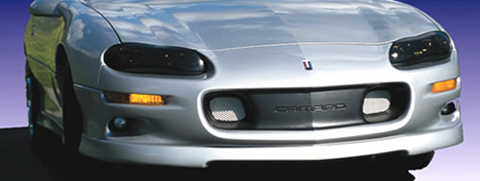
Camaro - base model which comes with a Series II 3800 3.8L V6 engine rated at 200 HP. Prior to 1996, the standard engine was a 3.4L V6 with 160 HP with the 3.8L being an option in mid-1995. A 5-speed manual or 4-speed automatic (4L60E) transmission is available. A performance package (Y87) is also available starting in 1996 which includes a posi rear, rear disc brakes, 3.42 gearing in the A4, exhaust pipes/tips on both sides, and sport steering ratio.
RS - appearance package available starting in 1996 for the base Camaro (V6) only. It includes ground effects and an up-level spoiler. "RS" badges are located on the front fenders and rear passenger bumper.
Z28 - high end model which comes with the 5.7L V8 (LT1) engine rated at 285 HP. Prior to 1996, it was 275 HP, but the a second catalytic converter added 10 more HP. A black roof treatment was standard on all 1993 and 1994 Z28s, and 1995 models and later offered a roof that was the same color as the rest of the body as an option. A 6-speed (Borg-Warner T-56) or 4-speed automatic (4L60E) transmission is available. The suspension and brakes are enhanced for improved handling. Two available Preferred Equipment Groups make the car either moderately or fully loaded. "Z28" badges are located on the front fenders and rear passenger bumper. In 1993, an Indy 500 Pace Car version (with automatic transmission) was made with a black and white paint scheme and mutli-colored paint stripes along each side of the car.
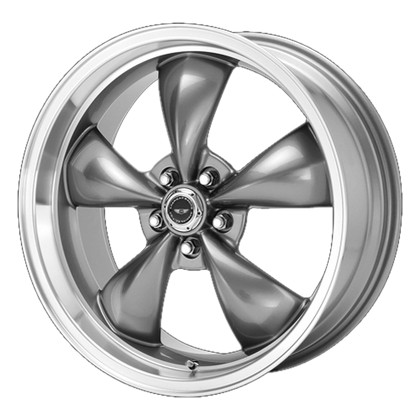
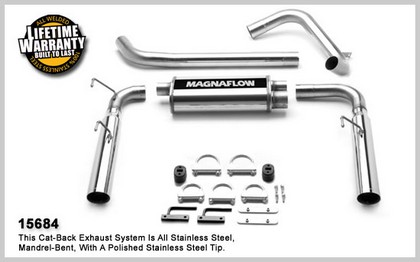
SS - available as an upgrade to the Z28 model starting in late-1995 (as a 1996 model). The package include a functional ram air hood scoop and reworked exhaust manifolds resulting in 305 HP and 335 ft-lbs of torque. An optional freer flowing exhaust system brings HP to 315 and torque to 342 ft-lbs. The stock wheels and tires are replaced with 5-spoke 17" ZR-1 style wheels with 275/40ZR/17 tires. Hurst shifter and Torsen differential were available options. Bilstein shocks, stiffer rate springs/bushings, and a larger front sway bar make up the optional Level-II suspension. The stock spoiler is replaced with sleeker looking one. "SS" badges replace the "Z28" badges on the front fenders and rear passenger bumper. All cars were shipped as stock Z28s to Street Legal Performance (SLP) Engineering where the above modifications were made through 1997. After that, GM made the modifications on its own assembly line.
SS/LT4 - available only in 1997 with all of the standard and optional SS equipment, but the LT1 was replaced by a balanced and blueprinted LT4 engine with 330 HP. Additionally, they got a new stainless steel exhaust system and exhaust manifolds, and a new Bilstein performance suspension set-up. The cars had to be special ordered as 30th Anniversary cars with a 6-speed tranny, and no T-tops or convertible, and they were then sent to SLP for modification. Production was limited to 100 cars.
30th Anniversary - appearance package upgrade available only in 1997. All white exterior (plus white 5-spoke 16" wheels) and two orange stripes (about 6" wide) running from nose to tail. The interior got white leather appointments and houndstooth seating surfaces with 30th Anniversary logos. A '96 Brickyard 400 Pace Car version got teal and gold decals on each door and rear quarter panel. 1000 of 30th Anniverary Z28 cars were sent to SLP for conversion into SS's (with 100 of the 1000 being SS/LT4's).
Convertibles - available on all models starting in 1994. The Z-rated tires are a must in order to avoid a speed governor.
Pontiac:
Firebird - base model which comes with a Series II 3800 3.8L V6 engine rated at 200 HP. Prior to 1996, the standard engine was a 3.4L V6 with 160 HP with the 3.8L being an option in mid-1995. A 5-speed manual or 4-speed automatic (4L60E) transmission is available. A performance package (Y87) is also available starting in 1996 which includes a posi rear, rear disc brakes, 3.42 gearing in the A4, exhaust pipes/tips on both sides, and sport steering ratio.
Formula - high end model which comes with the 5.7L V8 (LT1) engine rated at 285 HP. Prior to 1996, it was 275 HP, but the a second cat converter added 10 more HP. A black roof treatment was standard on all 1993 and 1994 Z28s, and 1995 models and later offered a roof that was the same color as the rest of the body as an option. A 6-speed (Borg-Warner T-56) or 4-speed automatic (4L60E) transmission is available. The suspension and brakes are enhanced for improved handling. Two available option packages make the car either moderately or fully loaded. "Formula" badges are located on the front driver headlamp and rear passenger bumper. 1993 and 1994 car badges also had a "V8", and white cars with the white wheels for those same years got badges on the front-lower part of each door. A performance package (WS6) is also available starting in 1996 which includes a ram air hood and intake, freer flowing exhaust, and upgraded suspension.
Trans Am - same setup as the Formula, but with specific nose (fog lights and air dam), tail (contoured lower valance), and side ground effects. It has same rear spoiler as the Formula, although an "up-level" spoiler is an available option. A performance package (WS6) is also available starting in 1996 which includes a ram air hood and intake, freer flowing exhaust, and upgraded suspension.
Trans Am GT - available only in 1994, same as the regular Trans Am, but with all the options including "up-level" rear spoiler and GS-C tires coming standard on the car. All 1993 Trans Ams had the GT treatment as standard, but they were not referred to as GTs. In 1995 and after, the treatment got broken down into a number of options like on the Formula.
Firehawk - available as an upgrade to the Formula model starting in 1993. The package include a functional ram air hood scoop and reworked exhaust manifolds (starting in 1995) resulting in 305 HP and 335 ft-lbs of torque (300 HP and 325 ft-lbs prior to 1995). An optional freer flowing exhaust system brings HP to 315 and torque to 342 ft-lbs. The stock wheels and tires are replaced with 5-spoke 17" ZR-1 style wheels with 275/40ZR/17 tires. Hurst shifter and floor mats were available options starting in 1995. Bilstein shocks, stiffer rate springs/bushings, and a larger front sway bar make up the optional Level-II suspension which was an available option starting in 1996 along with a Torsen differential, up-level (Trans Am) spoiler, fog lamps, and car cover (all separate options). "Firehawk" badges replace the "Formula" badges on the front fenders and rear bumper. Badges are also added to the front-lower doors. Stickers showing the HP rating were placed on each side of the hood scoop from 1993 to 1995. All cars were shipped as stock Formulas to Street Legal Performance (SLP) Engineering where the above modifications were made through 1997. After that, GM made the modifications on its own assembly line. Production is limited: 1993 = 250, 1994 = 500, 1995 = 1,000, and 1996 = 500. Twelve 1994 Trans Am GTs were shipped to SLP as pilot cars and were equipped with the Firehawk setup, of which two are 25th Anniversary convertibles and three are 25th Anniversary hardtops. Some of these pilot cars also had headers installed bringing them up to 325 HP (although it's more like 340 HP).
Firehawk/LT4- available only in 1997 with all of the standard and optional Firehawk equipment, but the LT1 was replaced by a balanced and blueprinted LT4 engine with 330 HP. Additionally, they got a new stainless steel exhaust and exhaust manifolds, and a new Bilstein performance suspension set-up. The cars had to be special ordered with a 6-speed tranny, and no T-tops or convertible, and they were then sent to SLP for modification. Production was limited to 100 cars.
Comp T/A - available only in 1995 and 1996 as a Trans Am with all of the standard and optional Firehawk equipment. Silver exterior (plus 5-spoke 17" x 9" wheels and BFG P275/40ZR/17 Comp T/A tires) and a gray stripe (about 6" side) running from nose to tail. The floor mats and headrests got Comp T/A logos stitched in to them. Logos were also painted below the Trans Am badges on the doors and on the front driver headlamp. Production was limited to 200 cars (72 in 1995 and 128 in 1996).
25th Anniversary T/A - appearance package upgrade to the Trans Am GT available only in 1994. All white exterior (plus white 5-spoke 16" wheels) and blue stripe (about 6" wide) running from nose to tail. The interior got white leather seats and appointments with 25th Anniversary logos. Logos were also painted below the Trans Am badges on the doors. Production was limited to 2000 cars (1750 coupes and 250 convertibles).
Convertibles - available on all models starting in 1994. The Z-rated tires are a must in order to avoid a speed governor.
Q: What's the difference between the
'93s and '94s?
A: Main mechanical differences include: a change from Multi-port to Sequential Fuel Injection (including an upgrade from 22 lb. fuel injectors up to 24 lb. injectors), a change from Speed Density to Mass Air Flow (MAF) Control, the EPROM computer chip became soldered to the main computer board making it no longer removable, the 4 speed automatic (4L60) was upgraded hydraulic controls to electronic controls (4L60E), 6 speeds got a 3.42 rear (up from 3.23 in '93), the first gear ratio of the 6 speed was changed so that the overall ratio in first gear was almost identical for both years, a change from single wire O2 sensors to 3 wire heated ones, the air openings on the exhaust manifolds are in a different place, and a dampner was added to the yoke assembly on the prop shaft (this acutally went into production in the later '93 LT1 cars). Additionally, the '94 Pontiac Formulas and Trans Ams with automatic trannys had a switch added to the center console allowing the selection of "normal" or "performance" mode.
Q: What's the difference between the
'94s and '95s?
A: No major changes were made to the '95 cars. GoodYear 245/50 16" RS-A All- Season tires became an available option on the LT1 cars. On the Formulas and Trans Ams, 5-spoke 16" polished aluminum wheels became standard (chrome option is set for next year). On Z28s. the black roof and side mirror treatments can be deleted such that they will be the same color as the body of the car. In mid-year '95, a version of the Buick 3800 3.8L V6 is being offered as an option in the base Camaro and Firebird (estimated at 200 hp). A power antenna was added to the hi-end stereo package and the Pontiac steering wheel was redeisgned (which was actually taken from the Grand Prix). The Trans Am GT (name) was dropped and the wild wing and upgraded stereo/performance options which made up the 94 GTs became an option to add to the base Trans Am. The Formula badges on driver headlamp and rear bumper only said "FORMULA" (whereas they had "FORMULA V8" in the past).
The camshaft, distributor, and drive mechanisms for the distributor and water pump are different. The changes were basically made to improve the distributor by adding a ventilation system that is connected to the air intake. This draws air through the distributor to eliminate moisture buildup in the optical mechanism. With the low distributor mounting, plus the water pump being directly overhead, there was a tendancy for moisture and coolant to seep into the distributor leading to the infamous "optispark" problems. The drive mechanism between the cam, distributor, and water pump was also improved.
California, New York, and Mass. emission options add an extra catalytic converter connected at the end of the driver's side header pipe. This gives an estimated 10 HP extra. But such an increase was not advertised.
Q: What's the difference between the
'95s and '96s?
A: Dual catalytic converters became standard on all Z28s, Formulas, and Trans Ams. This raised the advertised HP up to 285 from 275 for all such cars. The oil cooler (KC4) was dropped altogether. Recyclable cooper/lead bearings replace cadmium/lead bearings. Low-resistance ignition wires were designed to improve idle quality and cold-start performance. A redesigned ignition coil has half of the primary inductance as the previous coil allowing the primary current to "pour in" much quicker for much improved output at higher RPMs. Revised pistons used a new positive-twist top ring that improved the piston-to-cylinder seal and reduced blow-by emissions at high speeds. The pushrods were no longer hardened as they were in previous years. The exhaust manifolds got tri-layered stainless steel gaskets for improved durability and reduced leaks. The biggest change was that of the on-board computer. 1996 was the first year of OBD-II ECM technology to better diagnoses engine problems. This was good for reliability, but bad for some modifications in that some heavy modifications to the engine could result in a Service Engine Soon light. OBD-II also required oxygen sensors just before and after the catalytic converter for before and after measurements. Although the ones after the converter really only measure the performance of those before it.
Physically there's not much different. The exhaust tips on the Pontiacs changed from the dual-circles to single oval outlets on each side. The year brought a number of new packages. The Buick 3800 3.8L V6 was the only engine in the base Camaro and Firebird. There was also the return of the Ram-Air Pontiac (originally debuted on the late '60s GTOs). This was part of the WS6 performance package. It's just like the Firehawk except the openings on the hood are a little more forward. The package had a freer-flowing exhaust, tighter suspension (32mm front sway bar, 62 Nm front springs, 23-30 Nm variable-rate rear springs, and new valved shocks), and 17" 5-spoke wheels. HP was rated 305. SLP made the WS6 modifications at their plant after the cars left GM's factory.
Other new options included a remote, factory installed, 12-disc compact disc changer (U1S), content theft alarm requiring keyless entry (UA6), 5-spoke chrome wheels (P05). The base Firebird and Camaro models could get a sport package (Y87) with a posi rear, rear discs, 3.42 gearing in the A4, exhaust pipes/tips on both sides, and sport steering ratio. It required the 235/55 16 inch tires (QBC) though. Interior colors available on all cars were graphite, taupe (tan), and red (leather only). A new exterior color of red-orange metallic replaced medium red. As for the 1LE option, it came with A/C for the first time which was standard on all Z28s and Formulas.
Q: What's the difference between the
'96s and '97s?
A: No major mechanical changes. The Chevy's got a moderate facelift in the interior with a new instrument panel and dash more like that of the Pontiac. The Chevy's rear taillights were sectioned differently with the outter half as the brake light (red, of course) and the inner half being split (top and bottom) as the turn signal (amber) and revese light (white). Additional cup holders were integrated with the redesigned console on Chevys and Pontiacs. An auxiliary power outlet was added. The vent and climate controls were all backlit and the instrument cluster was redesigned with new 3-D graphics. The high-end stereo systems were also upgraded. The Ponitacs could get the new 500-watt, 10-speaker Monsoon system and the Chevys could get the new 200- watt, 6-speaker system (plus a 12-disc CD changer was available for each. Daytime running lamps arrived (using the parking/turn signal lights on the Pontiacs due to the pop-up headlamps).
As for colors, bright green metallic replaced teal/aqua and bright purple replaced dark purple. A new dark pewter interior replaced the graphite interior, and the medium gray interior color was revised. Also the wipers were redesigned having a lower profile than previously.
Engines remain the same, but the 3800 in the base Firebird and Camaro get a vibration damper. The automatic became the standard transmission in all cars. A manual had to be specifically ordered (like the automatic used to be). This also meant the price of the automatic was built into the base price of the car and thus owner's opting for the manual tranny didn't get any type of price break.
Q: What's included in the B4C police
package?
A: According to "The Genuine Camaro White Book" by Michael Antonick, on a 93 Camaro, the B4C "special service" option included:
The term "performance suspension" refers to the suspension which normally comes on a Z28, as opposed to the suspension which comes on the base non-Z28 Camaro or on the 1LE Z28. One other enticing thing is the package is cheaper than the regular Z28 options in order to give law enforcement and local goverment a break. Good luck trying to order one though. First, you have to find a dealer who will do a fleet order for you. The B4C is a "special services package" that is only orderable under a fleet number. It has no "stated" restrictions in the order book, but currently Chevy will not build one for a non-police department. And that means providing documention indicating delivery to a police station.
Q: What's included in the 1LE
performance package??
A: The package required these options (Z28/Formula, respectively):
and it consisted of:
The 1993 1LE cars had the same springs and deCarbon shocks (but with much stiffer valving) as on the stock Z28s and Formulas. Initial 1994 1LE cars received the same set-up, but sometime during model year (between Dec 94 and Mar 95), the 1LEs received stiffer (higher/variable rate) springs and the shock valving was slightly reduced (but still considerably stiffer than the stock deCarbon valving). Due to the stiffer springs and modified valving, the 21mm rear sway bar was dropped in favor of the 19mm bar (which was the same as on the stock Z28s and Formulas). In 1996, the Koni double adjustable shocks became standard on the 1LE cars. Increased cooling on 1995 and after models was accomplished by the addition of an air conditioning radiator baffle even though no AC was available in 1995. Also, after 1995, in order to get the 1LE on the Firebird or Trans Am you had to order the WS6 package.
Here's a list of suspension parts and prices for 1994 models:
Part No. Description Wholsale / List Price --------------------------------------------------------------- 22145653 Left front upper control arm $109.50 $146.00 22145654 Right front upper control arm $109.50 $146.00 22145389 Left front lower control arm $111.75 $149.00 22156436 Right front lower control arm $111.75 $149.00 26032907 Front stabilizer bar $67.37 $89.70 26039956 Stabilizer bar insulator (2) $7.20 $10.00 10262147 Rear axle tie rod $33.94 $45.25 10164151 Rear lower control arm (2) $49.31 $65.75 10021221 Rear stabilizer bar $45.94 $61.25 22124790 Rear shock absorber (2) $57.75 $77.00 22132561 Front springs (2) $80.00 $100+ 22132562 Rear springs (2) $80.00 $100+
The Lou Fusz automotive network of dealers have items at the wholesale price.
Q: What's included in the WS6
performance package??
A: The package was available starting in 1996 on Formulas Trans Ams only. Included in the package were:
The intake and exhaust add an 30 extra HP giving WS6 cars a total 305 HP.
Q: What's included in the
F1-Camaro/Firebird-GT package?
A: This is a package available through most dealerships. It offers a variety of performance and costmetic parts from the GM Performance Group. The following is a list of the parts for the F1-Camaro (and for the Firebird-GT) and can be ordered for your Z28 or Formula through your dealership:
Part No. Description ------------------------------------------------------------------------- 12363906 32mm front stab. bar, bushings, link kit, and track bar 12364002 17"x9"x50mm ZR-1 style wheels with P275/40ZR-17 Comp T/A tires 12363998 16"x8"x66mm ZR-1 style wheels with P245/50ZR-16 Comp T/A tires 12363902 6-speed Hurst shifter (leather wrapped shift knob) 12363925 cat-back performance exhaust (dual single-side outlet) 12363940 3 piece rear spoiler (primed) 12363915 4 piece ground effects package (primed) 12363978 cold air induction packge (1993, for use with MAP) 12363979 cold air induction packge (1994 and up, for use with MAF) 12363910 F1 Specialty Vehicle Package - everything above (1993) 12363911 F1 Specialty Vehicle Package - everything above (1994 and up) 123638xx coup floor mats (xx is 94-graphite, 95-gray, 96-beige, 97-neutral) 123638xx conv floor mats (xx is 98-graphite, 99-gray, 00-beige, 01-neutral)
Q: What special aftermarket cars
were available?
A: In 1996, the Harley Davidson Edition Trans Am was available. Harley took a black Trans Am equipped with the WS6 Ram Air package (without the interior from the the factory) and added leather/fabric seats which are embroidered with the Harley Davidson logo. The car also has Harley Davidson decals on the front quarter panels just behind the tires. Only 40 are known to have been made with most of them being distributed in Southern California.
In 1997, the Lingenfelter Hurst Firebird was available. Lingenfelter took a black Firebird Formula with the WS6 Ram Air package and added a 58mm throttle body, LPE intake manifold, LPE CNC ported LT4 heads with hardened pushrods and guideplates, Competition Cams 1.6:1 roller rocker arms and heavy duty dual valve springs with titanium retainers, aluminum driveshaft, Hurst shifter, shorty headers and Borla cat-back exhaust. Power was set at 350 HP. The exterior has a wide gold stripe running the length of the car with Lingenfelter Hurst/Firebird decals and ground effects package. Inside, the head rests and floor mats we embroidered with logos and the car came with a dash plaque, alarm, and custom car cover. The price tag was $44,458.
In 1997, Dennis and Kyle Mecham, of 2nd and 3rd gen Macho Trans Am fame, came back to of produce a 20th Anniversary MACHO Trans Am. The new Macho T/A was available in three stages: Basic, HO, and SD packages. The Basic package included a Mecham-designed rear wing, new fiberglass hood, and painted on Macho graphics. Power modifications include the same bolt-on parts as the Firehawks (315 HP) and was priced around $30,000. The HO package included the Basic upgrades in addition to a cam and head upgrade, raising power to around 400 HP and was priced around $42,000. The SD package included the Basic and HO upgrades in addition to larger/wider wheels, upgraded brakes, and a bored and stroked engine producing up to 500 HP. A wide choice of options was available for the SD and was priced around $60,000 (depending on options). The Macho T/A's were produced at the same location (Glendale, AZ) as the originals of the late-70's and early 80's, although the name had changed from Mecham Pontiac to Biddulph Pontiac. The first three prototypes of the above packages were built, with up to 20 being built in total.
The Pro-Am III Firebird was done by a company in Chattanooga, TN. The cars are base V6 Firebirds with large "Pro-Am III" lettering on the doors. The stock hood got a fiberglass ram air scoop attached to the top (looking the Firehawk/WS6 hood), but it's not functional. It also got side skirts, a dual outlet muffler, a numbered plaque, two-tone paint, chrome 5-spoke 16" wheels (with the original base tires), and different bumper covers.
Q: Why pay more for the Firehawk/SS
option than a supercharger would cost?
A: If your only goal is to go fast, don't buy a Firehawk; get a crotch rocket, 454 Vega, or any number of fast vehicles. Different people have different priorities. To some, the Firehawk package offers the perfect balance of performance, good looks, ability to hold its value in the long term, FULL warranty, and price. The same goes for the SS.
Q: What's the difference between the LT1 and its predecessor the L98?
A: There is a recent SAE paper that compares and contrasts the two engines. It discusses history, cooling, lubrication, breathing, ignition, etc. The name of the paper is "New Generation Small Block V8 Engine," SAE paper 920673, by Anil Kulkarni of GM. It can be obtained from the SAE by calling 412-776-4841.
Q: What's the difference between the
F-body LT1 and that in the Corvette?
A: The engines are exactly the same with the exception of the air intake and the exhaust. Also the Corvettes have two knock sensors and 4-bolt mains compared to 1 knock sensor and 2-bolt mains on the F-Bodies, repsectively. The Corvette has a larger/wider air intake box plus a dual muffler/exhaust which accounts for the additional 25hp. The F-Bodies are also supposed to have a redesigned oil pan as the Vette one doesn't fit with the F-body crossmember.
Q: Why don't F-Body LT1s get
synthetic oil at the factory like Corvettes do?
A: Some Corvette LT1s do not have a engine oil cooler as the f-body cars do. Since this may cause the Vette LT1 to run somewhat hotter, synthetic oil is used for it's ability to withstand higher temperatures without thermal/ viscosity breakdown. Although, Corvettes with the performance suspension are supposed to have oil coolers.
Q: Which cars got an engine oil
cooler?
A: Oil coolers were only available on the 1993 - 1995 models. And even then, the oil cooler did not come standard on F-bodies. You got the oil cooler as part of one of the preferred equipment options on a 6 speed car, or if you ordered an automatic equipped car with the performance rear axle. It also came on any car equipped with the 1LE option package.
So, you would not get the oil cooler on an automatic equipped car which came with 2.73 rear end gearing, and you would not get the oil cooler if you order a 6 speed car and then did not order either the 1LE option package or one of the preferred equipment groups.
You can visually inspect your car for the oil cooler. It's simply a metal tube running from above the oil filter to the radiator (carrying antifreeze for cooling) and then back to engine block. The sticker in the glove box should also have a "KC4" which is the option code for the oil cooler.
Some owners of 1995 Formulas and Trans Ams (which should have the cooler based on having an option above), actually claim they don't. It's not yet known why, since sales literature says they should.
Q: Why has oil coated the underside
of my engine and transmission?
A: It's most likely that the seal around your intake manifold is leaking. While it was originally thought to be the intake manifold gasket itself leaking, it's now found to be the sealant being used. The reason is a gasket is only applied to the left and right sides of the manifold while the front and back are sealed with RTV sealant. If the sealant is applied to a surface which isn't clean, the oil will be able seep through. This is why the oil leak is usually found at the rear of the engine (dripping down onto the tranny). It can be easily mistaken for a rear main seal leak. And since the RTV sealant is used on the front of the intake manifold, it's not uncommon to find it leaking there, too. A classic symptom of this intake leak is a rough cold idle. There is a Technical Service Bulletin (#476111) which calls for the replacement of intake gasket with a new and improved one, but that's to deal with a problem of the actual gasket (used on the left and right sides of the intake) laminate burning and causing a foul odor to enter the car through the ventilation system. If you have a 1994 F-Body, you might be able to get your oil leak fixed using this TSB (even though it's for a separate, but closely related problem). Otherwise, you'll have to have the dealer verify the leak which will likely be running black-light dye thorugh the engine. The revised gasket kit is part # 12524653.
Other, less common areas to check for leaks include the oil pan gasket, the oil dipstick tube seal (where it enters into the oil pan), and the timing chain cover seal.
Q: Why has my oil pressure reading
suddenly started to drop at higher RPMs?
A: A low pressure reading at higher RPMs can be caused by 3 things: worn rod bearings, the oil pump pickup set too low to oil pan, and debris caught in the pump pickup screen. Have you recently had an intake manifold oil leak on your car fixed (as described in above)? If so, it's probable that excess RTV sealant has broken off and got sucked into the engine where it's now lodged in the pickup screen. This will cause oil starvation at higher RPMs. Go back to the dealer and have them check the pickup screen for any clogs.
Q: What's that foul, burnt smell
coming in the vents at stop lights?
A: First be sure you don't have the oil leak problem mentioned above. If not, You may have a problem with oil leaking from the O-ring seal around the tailshaft. It drips onto the Y-pipe and burns off with the odor being sucked into the ventilation system. Reports of replacing the seal (part # 8673526) and bushing (part # 6260048) seem to fix the problem. Check with your dealer as these parts are supposed to have been improved/upgraded.
Q: What air intake (induction)
upgrades are available?
A: A number of companies sell replacement air intakes for between $130 and $350. Using of one of these intakes along with a K&N air filter can be good for a 10-20 hp increase. An aftermarket exhaust should be installed in addition to an aftermarket induction system for the best performance gains. Although, nothing says one mod should be done before the other. Here are some companies providing systems:
Arizona Speed&Marine 602-437-2510
C&L Performance 205-882-6813
Callaway 800-231-1121
Car Pro Motorsports 800-670-8862
GM Performance Parts (local dealer)
Hennessey 703-849-5081
L.G. Motorsports 214-272-7753
Lingenfelter 219-724-2552
K&N Filtercharger (local shop)
Paxton/Granatelli 805-987-5555
Random Technologies 770-978-0264
Saga Enterprises 909-275-0726
Prices range from $150 to $300 depending on the extent and the quality of replacement parts. Kits like Hennessey are plastic and replace the air box right up to the MAF, while Arizona S&M are chrome replacing the air box up to the MAF as well. Saga is a bolt-on scoop which goes under the front driver-side fender, giving a ram-air effect into the stock set-up. One other alternative is the Tornado Air Management System (800-500-8880) which costs around $70. It's a centrifigal air accelerator that fits into the air intake between the air filter and throttle body. It swirls the air, thereby accelerating it (like ram-air) and smooths the flow reducing turbulence and allowing more air to be available per cubic inch for combustion.
Q: How can I make my own air intake
without spending a lot of money?
A: While it may not look like the aftermarket chrome and molded plastic ones available, this is a sure-fire, bang-for-the-buck way to create your own air intake for a significantly smaller amount of cash.
Most of the following items can be bought at your local parts store or speed shop for around $50. The K&N filter is going to be 80% of that cost. You will need to buy a K&N filter (RE-0870) 9 inch conical air filter (or one of similar size and shape), a 2 to 3 foot long and 4 to 4.5 inch wide flexible hose (Mighty Flow brand intake ducting (part# 96074) works very well), two 4 inch clamps, a 1 inch clamp, and a small Fram (or other brand) crankcase filter. If the K&N filter includes its own clamp, then you only need to buy one 4 inch clamp. If you can't find any type of intake ducting hose, you can use flexible hosing like that on your clothes dryer, but this type of hose isn't too rigid and can be easily crushed by the hood. Plus it's difficult to clamp since it's relatively soft.
Installation on the the 1993 cars is going to be a little tricky. Since the 93's are speed density, they don't have a Mass Air Flow (MAF) sensor (like the 94+) which connects your intake hose to the rubber snorkle/elbow going into the throttle body. You'll need to find an INFLEXIBLE piece of tube or hose with the same 4" - 4.5" diameter which you can clamp the intake hose and rubber snorkle/elbow to, thereby connecting the two. A piece of PCV pipe will work. Or you can saw off the end of the stock intake piece (which you are removing), and use that as your connection. The 94's and later make use of the existing MAF sensor, so there's no need to find an extra connecting piece.
On those cars with MAF sensors, use the rubber gasket that's on the stock intake piece (which you are removing) by putting it around the MAF. Then put your new flexible hose onto that. It increases the diameter of the MAF from about 3.5" to about 4" which helps the hose fit nice and snug.
Simply clamp the K&N filter onto the new flexible intake hose and drop it down through the hole that the stock intake piece was sitting in. Then connect the other end of intake hose to the MAF (or your make-shift pipe piece for the 93's). Everything should just lay snuggly in place. The last step is to clamp the small crankcase filter to the air pump hose (whch was originally connected to the stock intake piece). Then you're set to go.
Q: What's that plastic tube which
runs perpendicular to the air intake?
A: This is a noise reduction tube which comes with cars with air conditioning. It stores air at heavy throttle as it cuts down on the sucking or howling sound some engines produce. It's not evident whether this interferes with air flow, but it's unlikely. From 1996 and on, all cars had the tube since AC became a standard feature that year. Cars with air conditioning "delete" (option C41), like the '93-'95 1LEs, do not get this tube. The piece without the tube can be ordered from a GM dealer. The '93 - '94 part number is 25147210 and '95 is 25157187.
Q: What aftermarket performance
items are available for the V6?
A: As with the LT1s, available modifications include K&N free flow filters, air induction kits from API (800-426-8967), Lingenfelter (219-724-2552), and RK Sport (800-214-8030). Dynomax and Borla exhaust systems are available from RK Sport. You can also get JBA headers, Nitrous Oxide systems, shorter rear gears, low temperature thermostats, computer reprogrammers, underdrive pulleys, and subframe connectors. Motorsports Technologies Inc. (MTI) (404-509-3494) carry most of these mods.
Q: What aftermarket headers are
available for the LT1?
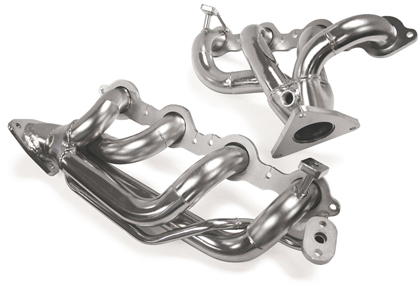
A: The following shows the current aftermarket header manufacturers and details on their products:
Manufact. Size Flange Tubing Stainless Coating Dual-cat avail.
----------------------------------------------------------------------
Ariz S&M 1 3/4 3/8 14ga No HPC (ceramic) Yes
Edelbrock 1 5/8 5/16 16ga Yes Black paint Yes
Edelbrock 1 5/8 5/16 17ga No Pro-Tech Yes
Hooker 1 3/4 No High temp black No
Hooker 1 5/8 No
JBA 1 5/8 3/8 14ga No Yes
MAC 1 5/8 16ga No High temp coat No
SLP 1 3/4 Yes Yes
Note the MAC's high temperature coating covers the exterior and 2" of the interior. The Edelbrocks alternate between 1 1/2 and 1 5/8 on a cylinder by cylinder basis, alternating in the firing order. The JBAs are AR (Anti Reversion) style which start out 1 5/8, then into an AR tube, and come out at 1 3/4. The 1 3/4 Hookers are full-length headers with no O2 sensor bungs, no AIR tubes, with a collector exiting near mid-tail of tranny, and requires a custom y-pipe at tail of tranny to connect to stock exhaust system.
Q: What's the size of the LT1
throttle body and can I use a larger one?
A: A stock throttle body inlet is 48 mm in diameter. The matching inlet on the intake manifold which it's attached to is about 52 mm. Therefore, you can safely buy a 52 mm one (like that from TPIS) and bolt it on in place of the stock one without any other modifications. Anything larger (like the 58 mm job from Lingenfelter) would require the intake manifold to be bored out to handle in the increased volume of air. The larger throttle bodies are not physically larger, they've just been bored out making the opennings larger.
The additional amount of HP from the 52mm throttle body is questionable. Some reports show little or no increase, yet others claim up to 10 more HP. And some air foils (to smooth the flow through the throttle body) claim to get another 5 HP. But even that is questionable. A 58mm throttle body (in conjunction with the bored intake manifold) might provide a larger increase in HP, but once again, results usually vary.
Q: Why and how should I bypass the
throttle body coolant lines?
A: A small amount of coolant is pass through the small hoses connecting to the throttle body. The main reason is so that during the winter months, the higher temperature of the coolant will keep the throttle body warmer thereby preventing icing. That's where the problem lies during the other months. By warming up the throttle body, you're warming up all of the air passing into the engine and thus losing some power (since cooler, denser air makes more power). It is also believed that during the hot, summer months, the coolant pass-through works to cool off the throttle body. So you must be careful when bypassing this so as not to lose it's benefits.
To do the bypass, first remove the small hose going into the throttle body on the driver side. You will probably have to remove the rubber intake elbow and black altenator brace. Make sure you have some rags handy to catch any coolant that my drip out. On the passenger side of the throttle body there are three hoses. Remove the lower one (which is very short and has a 90 degree turn to connect to a metal intake manifold hose). You may have to remove the other two hoses along with the sensors to get better access to the clamp. Then pull the disconnected driver side hose over, and connect it to the metal intake manifold hose from which you just disconnected on the passenger side 90 degree-turn hose. Hold onto that 90 degree hose in case you need it in the future.
Q: Why and how should I bypass the
EGR valve/line?
A: The EGR re-routes some of the exhaust gases back into the intake/combustion chamber. This is basically done to reduce emissions. Blocking it off will temperature of the intake since the gases fed back through the EGR are very hot. Lower intake temperature produces more power, but the amount of gases that are passed through the EGR is VERY minimal and probably won't result in much (if any) performance gain. The drawback is increased emissions.
If you look at the back of the passenger side of the intake manifold. You will see a tube that runs up to the manifold from the exhaust manifold. Take the tube off, pull it back, and look at it. You will see a two bolt pattern with a hole in the middle. Make some kind of plate to block the hole and guided on the bolt hole. You can make the plate out of any piece of scrap metal (sheet metal is fine). Put the tube back on with the plate in place.
Q: Why and how should I relocate my
idle air temperature (IAT) sensor?
A: The stock position of the IAT sensor (in the rubber intake elbow just before the throttle body) causes it to pick up a lot of intake manifold heat. This can be an extra 10 degrees F at highway speeds and 30 degrees F (or more) at idle. This causes the computer to retard the timing (zapping power) and causes the engine to run overly rich (since the MAF thinks there's more air going through it than there really is due to artifically high temperatures). By moving the IAT towards the air filter (away from the hot manifold), the ECM will get a more accurate reading of the actual intake temperature and will properly adjust the timing and fuel/air ratio. There's no need to worry about the air heating up more as it passes beyond the new location of the IAT since at wide open throttle, it takes the air 15/1000 of a second to travel from the air filter into the engine.
First, remove the IAT sensor from the bend in the rubber intake elbow. Then plug up the hole on the elbow with something. The site you relocate the IAT to will depend on what air intake (stock or aftermarket) you have. You want it as close to (if not, right in) the air filter. Snip the sensor wires first, as you can splice in lengths of wire after the sensor is in its new location. On a stock air box, you can drill a hole into the back of the box. On aftermarket intakes, try drilling a hole in the bottom of the air filter itself (works best on K+N conical filters) or on the pipe/tube to which the filter is connected. Either way, make sure the hole is placed in location which sees the air AFTER it passes through the air filter (otherwise debris may ruin the sensor). Then insert the sensor into the hole. After that, just splice wires to reconnect the sensor, solder the connections and protect with electrical tape or heat shrink-wrap.
Note, on ram air Pontiac cars (Firehawk and WS6), the IAT sensor is already located in the intake box. On ram air Chevy cars (SS), it doesn't appear you can relocate the sensor since the intake sits right over the hot intake manifold (which you're trying to get away from).
Q: What temperature is the stock
thermostat and can I go lower?
A: Stock on the 4th generation cars is a 180 degree thermostat. This should be good enough for any but the most seriously modified car. Although, you can go down to 170 or even 160. Hypertech sells a 160 which is supposed to be combined with their performance chips/programmers. And contrary to some opinions, the vehicle will not drop out of closed loop with 160 degree thermostat since that depends primarily on O2 sensor temperature, not engine temperature.
Q: What performance
"chips/programs" are available?
A: For the 1993 cars, Hypertech, Jet Technologies, Z Industried and Superchips make replacement chips. HP increases vary from 15 up to 30. However, in 1994 and after, chips are soldered into the on-board computer and can't be removed. Hypertech gets around this with their Power Programmer, a hand- held "computer" which plugs into the PCM module under the driver-side dash, and reprograms the stock chip. Performance gains are almost the same as replacing the chip. The programmer costs about $300, considerably more than the $150 - $200 you'd expect to pay for a replacement chip.
The Hypertech Program increases redline and shift points (on auto trannies) by about 500 RPM over stock, and it improves the fuel and timing curves. The cooling fans are enduced to coming on at lower temperatures. Any type of speed limiter will be overridden. It can also adjusting the speedometer for changes to aftermarket gears (like a 3.73). However, it doesn't modify the partial throttle shift points on cars with automatic trannies. Thus, even with the programmer, partial throttle shifts will still occur at higher RPMs than with the stock gearing. But most companies can create a custom chip or program to overcome this.
The Programmer can also be sent back to Hypertech to be reprogrammed to take advantage of modifications like headers, camshafts, and superchargers. One other thing to remember is to run 92+ octane fuel with the chip/programmer. Otherwise the engine is probably going to knock due to the timing change.
Q: Can I keep the stock thermostat
after installing a performance chip?
A: Yes, however you should do a little research first. Namely, find out if the new chip modifies the temperature at which the cooling fans come on and off. For instance, the Hypertech chip/program lowers the temperature at which the fans turn on and off. It turns the fans off at approximately 175 degrees F. This will a problem with the stock 180 thermostat because once the engine warms up enough to turn on the fans, the thermostat will cycle to bring the engine temperature down to 180 degrees F and keep it there. This could keep the temperature from getting down to 175 where Hypertech turns off the fans, and the fans could run continuously. This isn't bad for the engine, but it is bad for the fans in that it will probably burn out the fan motors.
Q: Can the fans be rigged to come on
while the engine is not running?
A: The following instructions are for all mid-1994 to 1995 production models. Slide two wires into the underhood fuse/relay box in the D2 and J2 slots for the #1 fan relay (D) and #3 fan relay (J). Splice them together and run them through a 1 amp fuse. Hook another wire to the ground. Then, with the ignition on, connect the ground wire to the spliced fan wires and both fans come on at high speed. When you're not using the setup, remove the ground wire and tuck it away so you can't see it. The J2 slot is also connected to the F5 slot in the #3 fan relay, so you can use either one, it seems. This essentially provides the ground signal to the relays just like the PCM would when FAN CNTL A10 and FAN CNTL A11 codes are set in the PCM. The relays click when you make the connection, so everything should be working just like if the computer set both codes.
This set-up requires the ignition to be in the "On" position and requires no splicing/cutting of any stock wiring. This works great to cool off your car at the drag strip especially when the engine is off.
1993 and early-1994 cars don't have dual speed fans and therefore have no #3 (J) fan relay. For these cars you can just round a ground to D2 for the primary fan and F5 for the secondary one.
On 1996 and later models, the wiring has changed and the above procedure will blow the fan fuse and turn on the Service Engine Light. So instead, in the underhood fuse box, remove the relay labeled 'F'. Molded into the plastic on the box itself where the relay was is the letter 'F' as well as numbers for each connector. You want to connect the pin labeled '3' with the pin labeled '4'. Note that this is a real feed, and bypasses the relay, so use at least 14 gauge wire. Current is 12A startup, and 8A running. Use a switch that can handle the load.
Solder the wires to the bottom of the fusebox, and put the switch just in front of the box where there already is a unused hole. Black wires and a black switch makes it looks neat. With this setup, you can turn the fan on whenever you want, even with the engine off. Don't forget to put the relay back once you locate the correct connections. Without relay, a code is set and the Service Engine light is lit. If you happen to get a light, it won't go away until you reset the computer. The easiest way to do that is to disconnect the negative battery cable for about 1 minute.
Q: Why am I losing/smelling
antifreeze, but nothing seems to be leaking?
A: Assuming you've checked the radiator cap and main hoses, it's possible your water pump is leaking. There's a small (2 mm) weep hole on the bottom of the pump. Black stains surrounding the hole indicate coolant seepage which is an early warning sign of pump failure. Another indication of a pump leak is if there's green-black staining on the small rubber hose that plugs into the engine block (just behind the main crank belt pulley). Any coolant dripping out tends to drip directly onto the rubber hose where it then flows down to the hot engine block and is boils off (leaving the staining). If you smell coolant at stop lights for instance, it's from it burning off on the block. Since the coolant boils off, the slow leak never has a chance to drip onto the ground, so you'll never see it.
Q: What fuel pressure setting will
give me the best performance?
A: Stock settings on the 4th gens are around 43 to 45 psi. The best (adjusted) pressure seems to be variable depending on your cars specific modifications. But even cars with similar mods react differently to pressure adjustments. Some people claim 47 to 49 psi is best, while others find a lower setting like 39 to 42 psi is best. From testing, it seems the computer will adjust itself to a fuel mix level it is comfortable with. So even if you turn up the pressure to 53 psi, after a few wide open throttle runs, the computer will lean out with each successive run, bringing itself down close to levels as though you were running 44 psi. So while adjusting the fuel pressure may have some effect, the computer retains a great deal (not 100%) of control as it will adjust the fuel mix based on each run. So you need to make multiple wide open throttle runs between adjustments of pressure to ensure you get to final equalibrium with the computer. The best way to find what's best for your car is trial and error.
Q: How easy is it to change the
spark plugs on the LT1?
A: The easiest way is probably to remove the Y-pipe. Soak all the bolts with WD-40 (best done the night before) and remove them. The Y-pipe and cat should drop right out. Doing this, will give you access to all of the plugs from under the car, except for plug #2. For that one, it's easiest to remove the alternator to get at it from the top.
If you're into doing things the hard way (that is, not removing the Y-pipe), make sure you have a lot of time on your hands and a lot of band-aids for your hands and arms. Before you do anything, realize that the plugs are supposed to be good for up to 100,000 miles, but only time will tell.
Here's the best method (without Y-pipe removal) found so far:
PLUG ACCESS TOOLS REQUIRED COMMENTS
1 Top Socket w/ Swivel Easy
3 Top Socket w/ Swivel Easy
5 Bot Socket w/ Swivel Slightly tricky
7 Bot Socket w/ Swivel Watch out for O2 sensor
2 Top Socket w/ Open End AC & Exhaust AIR Tubes make it NASTY
4 Top Socket w/ Swivel Completely blind on this one
6 Bot Socket w/ Swivel Difficult to reach, but doable
8 Bot Socket w/ Swivel Skiny arms are a MUST
NOTES:
1. Be sure to replace the heat shield covers on plugs 6, 7, and
8.
2. If you're changing the wires, be sure to route the #7 wire
through the the factory heat shield that runs between the exhaust
manifold and the block. If it makes contact with the manifold,
it's going to burn right through.
3. Use anti-seize compound on new plugs. The factory didn't which
made removal that much more difficult.
4. You may want to do the easiest plugs first, (saving #2 for
last) to give yourself a sense of accomplishment and to boost
your self-confidence.
Q: What spark plugs are available
for the LT1?
A: Here's cross reference of the different plugs along with the part numbers: Stock heat range:
Colder range:
Q: Why has my car developed a bad
hesitation problem (Optispark)?
A: First, check to your spark plugs wires and make sure none have come off. A few people have already experienced this problem. Then rule out any type of problem with the fuel system (injectors or pump) and air intake (loose clamp or hose). If those are okay, it's most likely your Optispark system. It's the pseudo-distributor of the distributorless LT1 where all the spark plug wires connect into. If water gets in there, it's as good as toast. Definitely head to your dealer to get it replaced as it will start eating your plug and wires in no time if there's something really wrong with it. A hesitation problem due to the Optispark will usually be noticed in certain RPM range. Most commonly, it is in the upper range (3500 - 5000 RPM). But it can certainly develop in the lower or mid ranges as well. You might even get some back-firing. The problem is most common on the 1993 and 1994 LT1s, as in 1995 a vacuum line was added from the intake manifold to the Optispark to draw moisture out of the unit. However, excessive water can cause even 1995 and later cars to develop the problem.
Q: Why does my car have a slight
stumble upon slow acceleration?
A: If it usually occurs from idle when then engine is warm and you get a short backfiring just before shifts, then it's probably the coil wire or the coil itself. If you notice the headlights flicker or flash at night when the car stumbles, it's almost assured the coil and/or coil wire need replacement.
Q: Should I use self-aligning or
non-self-aligning rockers?
A: You can use either since the LT1 has screw in studs, but non-self-aligning rockers require guideplates. This means longer rocker studs are needed as well as hardened pushrods. And that means more money. But the advantage of the non-self-aligning ones is the reduced valve train noise.
Q: What aftermarket camshafts are
available for the LT1?
A: The following shows the current cams and their specs:
Manufact. Duration Lift (1.5) Lift (1.6) Lobe Notes
Int Exh Int Exh Int Exh Sep
------------------------------------------------------------------------
CompCams 210 220 500 510 533 544 114
CompCams 230 244 510 540 544 576 114 heads, headers
CompCams 230 242 510 510 544 544 112
CompCams 215 224 500 500 533 533 112 custom grind
CompCams 215 224 499 499 532 532 114 2200-5700
CompCams 220 230 510 510 544 544 114 2500-6000
Crane 198 206 480 480 512 512 112
Crane 214 220 452 465 481 496 112
Crane 204 214 429 452 458 482 116
Crane 208 214 438 452 467 482 112
Crane 214 222 498 509 520 542 112
Crane 218 218 498 498 531 531 116
Crane 215 224 499 499 532 532 112 blower, custom
Crower 219 227 498 515 531 553 108
Doug Rippie 222 230 508 528 542 563
GM 450 450 480 480 LT1 stock ('93)
GM 201 208 450 460 480 491 LT1 stock ('94-'95)
GM 205 207 447 459 477 490 117 LT1 stock ('96)
GM 203 210 446 449 476 479 115 LT4 stock ('96)
GM 474 510 506 544 112 ZZ3*
GM 218 228 492 492 525 525 112 LT4 HOT
GM(Crane) 214 224 488 509 521 543 112
GM(Crane) 222 230 509 528 543 563 112
GM(Crane) 234 242 539 558 575 595 112
LG Motors 211 220 500 500 525 525 112 1500-6200
LG Motors 220 220 500 500 525 525 112 1800-6400
LG Motors 220 230 480 480 512 512 110 3000-6500
LG Motors 230 230 480 480 512 512 112 3000-6500
Lingenfelt 211 219 499 525 530 560 112 1600-5200
Lingenfelt 213 219 462 471 493 502 112 1600-5200
Lingenfelt 219 219 525 525 560 560 112 1600-6200
Lunati 213 218 446 468 475 499 110 1500-5300
Lunati 215 218 489 503 522 537 113 1500-5500
Lunati 232 242 510 525 544 560 108 2000-6500
Lunati 242 252 525 540 560 576 108 2200-6800
MTI 210 220 500 510 533 544 114
MTI 230 244 510 540 544 576 112
TPIS 212 226 483 520 515 555 112 ZZ9 ('93-'94)
TPIS 212 226 483 520 515 555 112 ZZ9 ('95-'97)
Note the ZZ3 requires a longer camshaft dowel pin for use in 1995 and later LT1s (GM part number 10214485). However, the replacement pin requires that the pilot hole on the cam be drilled slightly larger (in depth and width) to accommodate the larger pin. Note also the hole is tapered at the top and the bottom. That is, at the face of the cam, it's 5/8" across, however, as you go in, the width narrows to 1/2". The depth is 1 5/32", however, the very bottom 3/32" is tapered inwards to a point. So if you have a flat pin, then it will only go in 1 2/32" since the tapered part won't be wide enough to accept the pin any deeper.
Q: What aftermarket camshafts are
available for the V6?
A: The following 2.8L engine cams fit the '93-'95 3.4L engine:
Manufact. Duration Lift
Int Exh Int Exh
-----------------------------------
GM 12363220 204 216 427 454
GM 12353919 204 214 420 442
GM 14031378 196 203 394 410
Crane 254112 198 204 401 403
Crane 254122 204 214 423 423
Crane 253901 204 216 427 454
Crane 253941 216 228 454 480
Q: What's that knocking noise when
the engine is cold?
A: While the fuel injectors have a distinct tapping noise (usually under higher throttle), at a light load and low speed there seems to be "piston slap" on some people's cars. This occurs in some of the Vette LT1s as well. There doesn't seem to be anything in the service manuals. Most dealers seem to acknowledge the problem and say it's normal which it seems to be. For some reason, the pistons shrink enough in the cold weather so as to "slap" around a little. Once the car warms up, the noise should go away.
Q: What's that ticking noise when
the engine is under load?
A: It might be the EGR tube. It might sound like an exhaust leak from one of manifolds, but check for a possible crack in the EGR tube.
Q: What are the stock tranny gear ratios and torque capacities?
A: The following were available by year:
Year Model/Optn 1st 2nd 3rd 4th 5th 6th Final
---- ------------- ---- ---- ---- ---- ---- ---- -----
1993 Manual/M28 3.36 2.07 1.35 1.00 0.80 0.62 2.73 (GU2)
1993 Manual/M29 2.97 2.07 1.43 1.00 0.80 0.62 3.23 (GU4)
1993 Auto/MX0 3.06 1.63 1.00 0.70 -- -- 2.73 (GU3)
1993 Auto/MX0 3.06 1.63 1.00 0.70 -- -- 3.23 (GU5)
1994 Manual/MN6 2.66 1.78 1.30 1.00 0.74 0.50 3.42 (GU6)
1994 Auto/MX0 3.06 1.63 1.00 0.70 -- -- 2.73 (GU3)
1994 Auto/MX0 3.06 1.63 1.00 0.70 -- -- 3.23 (GU5)
Year Model/Optn Torque Capacity
---- ---------- ---------------
1993 Manual/M28 360 lbs-ft
1993 Manual/M29 400 lbs-ft
1993 Auto/MX0 400 lbs-ft
1994 Manual/MN6 450 lbs-ft
1994 Auto/MX0 400 lbs-ft
Note that the '95s and later have ratings that are the same as the '94s as nothing changed.
Q: What's the difference between the
4L60 and 4L60E tranny?
Q: What's CAGS (skip shift) and how
does it work?
Q: Why does my Service Engine Light
come on now that CAGS is disabled?
Q: How do disable the Skip Shift
light as well?
Q: Why is there no selectable 1st
gear for my automatic tranny?
Q: Why does my automatic tranny have
trouble going into and out of reverse?
Q: What's that screeching noise from
my automatic tranny on hard shifts?
Q: What's that rattling noise from
my manual tranny upon acceleration?
Q: What is that vibration I feel
around 1800-2000 RPM?
Q: Why does my manual shifter pop
out of gear just after going into 2nd?
Q: What's the best way to install a
Hurst shifter?
Q: Why was the rearend ratio on the
6-speeds changed from 1993 to 1994?
Q: What GM rear gears are available
for my car?
Ratio Part number
-------- -----------
2.56 : 1 26019802
2.73 : 1 26043705
2.93 : 1 26016282
3.08 : 1 14089176
3.23 : 1 26046642
3.42 : 1 26029418
3.73 : 1 14091497
4.10 : 1 26016309
The ratio's and part numbers refer to GM's ring and pinion gears.
Q: What's that clunking noise from
the rear when decelerating?
Q: What's that whining/grinding
noise from the rear on slow turns?
Q: Should I use synthetic rearend
gear fluid and limited slip additive?
A: It's short for "Acceleration Slip Regulator" - more commonly referred to as "Traction Control".
Q: What are the specs on the stock sway bars and springs?
Q: What are the factory front end
alignment specs?
Caster +3 degrees +/- .5 degree
Camber +1 degree +/- .5 degree
Toe in .15 degree +/- .5 degree
Q: What are some suggested front end
alignment specs?
A: Based on some list member recommendations:
Caster Camber Toe Total
(deg) (deg) (in)
L R L R
Stock suspension +3.5 +3.5 -.5 -.5 0
Eibach springs +4 +4 -.8 -.8 0
Q: What's that hallow clunking noise from the rear over bumps?
Q: What are the dimensions of the 16
inch wheels?
Q: What tire options are available?
Q: How should I rotate my tires?
Q: How come my GSC tires are showing
such excessive wear?
Q: Is it normal for the rear tires
to be rubbing against the wheel well?
Q: How much backspacing is required
for the wheels?
Q: What is the widest tire I can
use?
Q: How can I get another locking lug
nut key?
Q: Why are 1993 front brake pads
different from the 1994 and up models?
Q: What are the best replacement
brake pads to use?
Pad Type Front part#/cost Rear part#/cost
-------- ---------------- ---------------
Street 6234 / $39.92 4134 / $49.98
Z-rated 623Z / $95.62 413Z / $90.62
90-compound 14.4 / $197.65 13.4 / $128.70
Winston Cup 702F / $300 702R / $300
Q: What's that metal squealing noise
from the rear on high speed turns?
Q: Can I bleed ABS brakes without a
problem?
Q: What types of higher performance
brake fluid are available?
A: Various ones are available and can be safely used:
Brand Dry boil Wet boil DOT Price/pint
----- -------- -------- --- ----------
Prestone HD ? 284 F 3 $3.00
Ford 550 F 284 F 3 $3.50
PFC Z-rated 550 F 284 F 3 $7.00
Castrol LMA 446 F 311 F 4 $3.00
ATE Super Blue 536 F 382 F 4 $12.00 (1 liter)
Wildwood Hitemp 570 F ? $7.00 (3/4 pint)
AP550 >550 F ? $13.00
AP600 >572 F ? $21.79
Castrol SRF 590 F 518 F $35.50
Q: Where can I find 24 inch replacement wiper blades?
Q: How can I take my wiper arms off?
Q: Can I replace my fixed mast
antenna with a retractable one?
Q: What is causing the scatches on
my door window?
Q: What are the plastic blocks under
the car that say "Don't Jack Here"?
Q: How can I change my fog light
bulb?
Q: Why do my headlights flicker when
I drop down to 1500 or 1750 RPM?
Q: How can I disable my daytime
running lights and ambient light sensor?
Q: What are those dimples/dents on
the top of my rear quarter panels?
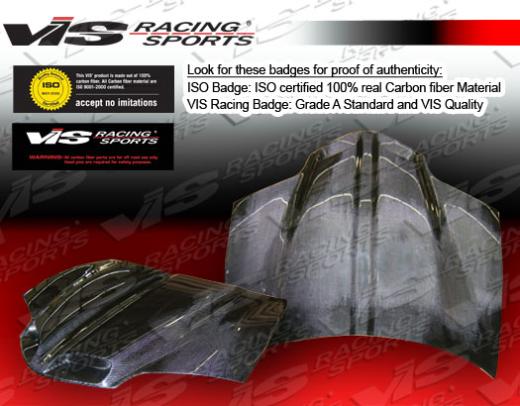
Q: Where can I get a Ram Air,
Firehawk, or SS hood?
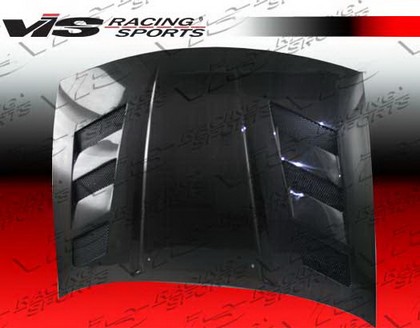
Part No. Description Wholsale / List Price --------------------------------------------------------- 12529226 Ram Air hood $1131.00 $1508.00 12529242 Duct-A/CL $67.50 $90.00 12529240 Hose-Pump $25.69 $34.25 12529235 CVR-A/CL $125.25 $167.00 25096933 Air filter $19.11 $27.98 12529823 Cover $162.75 $217.00 14104835 Bolts and screws (4) $10.20 $13.60 12529227 Left screen $54.00 $72.00 12529228 Right screen $54.00 $72.00
Q: What aero (dress-up) kits are
available for the Camaro?
Q: Which cars came with the speed limiter and 115 MPH speedometer?
Q: What's "performance
mode" button for on some of the Pontiacs?
Q: Why does my emergency brake
always seem to pull up to a different level?
Q: Why do objects seem to be
distorted through the front windshield?
Q: What is the Retained Accessory
Power feature?
Q: What type of impact will cause
the air bags to deploy?
Q: What's the purpose of the
steering wheel recall?
Q: Why has my cruise control
suddenly stopped working?
Q: Why does my "ABS In-Op"
light come on intermittently?
Q: Why does my "Low Trac"
light come on intermittently?
Q: Why is my Pontiac cassette radio
displaying a weird error code?
Q: What happens if forget the code
to my stereo's anti-theft feature?
Q: Why is my CD ejected from the
radio when I start up my car?
Q: Is there a CD changer which works
with the steering wheel controls?
Q: Can I upgrade my stock Bose
stereo system?
Q: Can a pre-96 CD holder piece be
retrofitted in to the later Camaros?
Q: Can I run wires from the engine
to the interior without drilling a hole?