2. Engine/Induction/Exhaust


CHOOSING A MOTOR OIL

More Than You Ever Wanted to Know About Motor Oil
[Version 1.2, 1994]
(By Ed Hackett - edh@maxey.unr.edu)

Edits:

Choosing the best motor oil is a topic that comes up frequently in discussions between motor-heads, whether they are talking about motorcycles or cars. The following article is intended to help you make a choice based on more than the advertising hype.

Oil companies provide data on their oils most often referred to as "typical inspection data". This is an average of the actual physical and a few common chemical properties of their oils. This information is available to the public through their distributors or by writing or calling the company directly. I have compiled a list of the most popular, premium oils so that a ready comparison can be made. If your favorite oil is not on the list, get the data from the distributor and use what I have as a data base.

This article is going to look at six of the most important properties of a motor oil readily available to the public: viscosity, viscosity index (VI), flash point, pour point, % tsulfated ash, and % zinc.

Viscosity is a measure of the "flowability" of an oil. More specifically, it is the property of an oil to develop and maintain a certain amount of shearing stress dependent on flow, and then to offer continued resistance to flow. Thicker oils generally have a higher viscosity, and thinner oils a lower viscosity. This is the most important property for an engine. An oil with too low a viscosity can shear and loose film strength at high temps. An oil with too high a viscosity may not pump to the proper parts at low temps and the film may tear at high rpm.

The weights given on oils are arbitrary numbers assigned by the S.A.E. (Society of Automotive Engineers). These numbers correspond to "real" viscosity, as measured by several accepted techniques. These measurements are taken at specific temperatures. Oils that fall into a certain range are designated 5, 10, 20, 30, 40, 50 by the S.A.E. The W means the oil meets specifications for viscosity at 0 deg F and is therefore suitable for winter use.

The following chart shows the relationship of "real" viscosity to their S.A.E. assigned numbers. The relationship of gear oils to engine oils is also shown.

      _______________________________________________________________ 
      |                                                             | 
      |      SAE Gear Viscosity Number                              | 
      |  ________________________________________________________   | 
      |  |75W |80W  |85W|    90        |        140             |   | 
      |  |____|_____|___|______________|________________________|   | 
      |                                                             | 
      |     SAE Crank Case Viscosity Number                         | 
      |  ____________________________                               |  
      |  |10| 20  | 30 | 40  |  50  |                               | 
      |  |__|_____|____|_____|______|                               | 
      |_____________________________________________________________| 
      2  4  6  8  10 12 14 16 18 20 22 24 26 28 30 32 34 36 38 40 42
                      viscosity cSt @ 100 degrees C
Multi viscosity oils work like this: Polymers are added to a light base (5W, 10W, 20W), which prevent the oil from thinning as much as it warms up. At cold temperatures the polymers are coiled up and allow the oil to flow as their low numbers indicate. As the oil warms up the polymers begin to unwind into long chains that prevent the oil from thinning as much as it normally would. The result is that at 100 degrees C the oil has thinned only as much as the higher viscosity number indicates. Another way of looking at multi- vis oils is to think of a 20W-50 as a 20 weight oil that will not thin more than a 50 weight would when hot.

Multi viscosity oils are one of the great improvements in oils, but they should be chosen wisely. Always use a multi grade with the narrowest span of viscosity that is appropriate for the temperatures you are going to encounter. In the winter base your decision on the lowest temperature you will encounter, in the summer, the highest temperature you expect. The polymers can shear and burn forming deposits that can cause ring sticking and other problems. 10W-40 and 5W-30 require a lot of polymers (synthetics excluded) to achieve that range. This has caused problems in diesel engines, but fewer polymers are better for all engines. The wide viscosity range oils, in general, are more prone to viscosity and thermal breakdown due to the high polymer content. It is the oil that lubricates, not the additives. Oils that can do their job with the fewest additives are the best.

Very few manufactures recommend 10W-40 any more, and some threaten to void warranties if it is used. It was not included in this article for that reason. 20W-50 is the same 30 point spread, but because it starts with a heavier base it requires less viscosity index improvers (polymers) to do the job. AMSOIL can formulate their 10W-30 and 15W-40 with no viscosity index improvers but uses some in the 10W-40 and 5W-30. Mobil 1 uses no viscosity improvers in their 5W-30, and I assume the new 10W-30. Follow your manufacturer's recommendations as to which weights are appropriate for your vehicle.

Viscosity Index is an empirical number indicating the rate of change in viscosity of an oil within a given temperature range. Higher numbers indicate a low change, lower numbers indicate a relatively large change. The higher the number the better. This is one major property of an oil that keeps your bearings happy. These numbers can only be compared within a viscosity range. It is not an indication of how well the oil resists thermal breakdown.

Flash point is the temperature at which an oil gives off vapors that can be ignited with a flame held over the oil. The lower the flash point the greater tendency for the oil to suffer vaporization loss at high temps and to burn off on hot cylinder walls and pistons. The flash point can be an indicator of the quality of the base stock used. The higher the flash point the better. 400 F is the minimum to prevent possible high consumption. Flash point is in degrees F.

Pour point is 5 degrees F above the point at which a chilled oil shows no movement at the surface for 5 seconds when inclined. This measurement is especially important for oils used in the winter. A borderline pumping temperature is given by some manufacturers. This is the temperature at which the oil will pump and maintain adequate oil pressure. This was not given by a lot of the manufacturers, but seems to be about 20 degrees F above the pour point. The lower the pour point the better. Pour point is in degrees F.

% sulfated ash is how much solid material is left when the oil burns. A high ash content will tend to form more sludge and deposits in the engine. Low ash content also seems to promote long valve life. Look for oils with a low ash content.

% zinc is the amount of zinc used as an extreme pressure, anti- wear additive. The zinc is only used when there is actual metal to metal contact in the engine. Hopefully the oil will do its job and this will rarely occur, but if it does, the zinc compounds react with the metal to prevent scuffing and wear. A level of .11% is enough to protect an automobile engine for the extended oil drain interval, under normal use. Those of you with high revving, air cooled motorcycles or turbo charged cars or bikes might want to look at the oils with the higher zinc content. More doesn't give you better protection, it gives you longer protection if the rate of metal to metal contact is abnormally high. High zinc content can lead to deposit formation and plug fouling.

   The Data:
   Listed alphabetically
   '---' = the data was not available
   'lt' = less than

   Brand                     VI    Flash    Pour    %ash   %zinc

   20W-50
     AMSOIL (old)           136     482     -38     lt.5    ---
     AMSOIL (new)           157     507     -44     ---     ---
     Castrol GTX            122     440     -15     .85     .12
     Exxon High Performance 119     419     -13     .70     .11
     Havoline Formula 3     125     465     -30     1.0     ---
     Kendall GT-1           129     390     -25     1.0     .16
     Pennzoil GT Perf.      120     460     -10     .9      ---
     Quaker State Dlx.      155     430     -25     .9      ---
     Red Line               150     503     -49     ---     ---
     Shell Truck Guard      130     450     -15     1.0     .15
     Spectro Golden 4       174     440     -35     ---     .15
     Spectro Golden M.G.    174     440     -35     ---     .13
     Unocal                 121     432     -11     .74     .12
     Valvoline All Climate  125     430     -10     1.0     .11
     Valvoline Turbo        140     440     -10     .99     .13
     Valvoline Race         140     425     -10     1.2     .20
     Valvoline Synthetic    146     465     -40    lt1.5    .12 

   20W-40
     AMSOIL                 124     500     -49     ---     ---
     Castrol Multi-Grade    110     440     -15     .85     .12
     Quaker State           121     415     -15     .9      ---

   15W-50
     Chevron                204      415     -18     .96     .11
     Mobil 1                170      470     -55     ---     ---
     Mystic JT8             144      420     -20     1.7     .15
     Red Line               152      503     -49     ---     ---

   5W-50
     Castrol Syntec         180      437     -45     1.2     .10
     Quaker State Synquest  173      457     -76     ---     ---
     Pennzoil Performax     176      ---     -69     ---     ---

   5W-40
     Havoline               170      450     -40     1.4     ---

   15W-40
     AMSOIL (old)           135      460     -38     lt.5    ---
     AMSOIL (new)           164      462     -49     ---     ---
     Castrol                134      415     -15     1.3     .14
     Chevron Delo 400       136      421     -27     1.0     ---
     Exxon XD3              ---      417     -11     .9      .14
     Exxon XD3 Extra        135      399     -11     .95     .13
     Kendall GT-1           135      410     -25     1.0     .16
     Mystic JT8             142      440     -20     1.7     .15
     Red Line               149      495     -40     ---     ---
     Shell Rotella w/XLA    146      410     -25     1.0     .13
     Valvoline All Fleet    140      ---     -10     1.0     .15 
     Valvoline Turbo        140      420     -10     .99     .13

   10W-30
     AMSOIL (old)           142      480     -70     lt.5    ---
     AMSOIL (new)           162      520     -76     ---     ---
     Castrol GTX            140      415     -33     .85     .12
     Chevron Supreme        150      401     -26     .96     .11
     Exxon Superflo Hi Perf 135      392     -22     .70     .11
     Exxon Superflo Supreme 133      400     -31     .85     .13
     Havoline Formula 3     139      430     -30     1.0     ---
     Kendall GT-1           139      390     -25     1.0     .16
     Mobil 1                160      450     -65     ---     ---
     Pennzoil PLZ Turbo     140      410     -27     1.0     ---
     Quaker State           156      410     -30     .9      ---
     Red Line               139      475     -40     ---     ---
     Shell Fire and Ice     155      410     -35     .9      .12
     Shell Super 2000       155      410     -35     1.0     .13
     Shell Truck Guard      155      405     -35     1.0     .15
     Spectro Golden M.G.    175      405     -40     ---     ---
     Unocal Super           153      428     -33     .92     .12
     Valvoline All Climate  130      410     -26     1.0     .11
     Valvoline Turbo        135      410     -26     .99     .13
     Valvoline Race         130      410     -26     1.2     .20
     Valvoline Synthetic    140      450     -40    lt1.5    .12

   5W-30
     AMSOIL (old)           168      480     -76     lt.5    ---
     AMSOIL (new)           186      464     -76     ---     ---
     Castrol GTX            156      400     -35     .80     .12
     Chevron Supreme        202?     354     -46     .96     .11
     Chevron Supreme Synt.  165      446     -72     1.1     .12
     Exxon Superflow HP     148      392     -22     .70     .11 
     Havoline Formula 3     158      420     -40     1.0     ---
     Mobil 1                165      445     -65     ---     ---
     Mystic JT8             161      390     -25     .95     .1
     Quaker State           165      405     -35     .9      ---
     Red Line               151      455     -49     ---     ---
     Shell Fire and Ice     167      405     -35     .9      .12
     Unocal                 151      414     -33     .81     .12
     Valvoline All Climate  135      405     -40     1.0     .11
     Valvoline Turbo        158      405     -40     .99     .13
     Valvoline Synthetic    160      435     -40    lt1.5    .12
All of the oils above meet current SG/CD ratings and all vehicle manufacture warranty requirements in the proper viscosity. All are "good enough", but those with the better numbers are icing on the cake.

The synthetics offer the only truly significant differences, due to their superior high temperature oxidation resistance, high film strength, very low tendency to form deposits, stable viscosity base, and low temperature flow characteristics. Synthetics are superior lubricants compared to traditional petroleum oils. You will have to decide if their high cost is justified in your application.

The extended oil drain intervals given by the vehicle manufacturers (typically 7500 miles) and synthetic oil companies (up to 25,000 miles) are for what is called normal service. Normal service is defined as the engine at normal operating temperature, at highway speeds, and in a dust free environment. Stop and go, city driving, trips of less than 10 miles, or extreme heat or cold puts the oil change interval into the severe service category, which is 3000 miles for most vehicles. Synthetics can be run two to three times the mileage of petroleum oils with no problems. They do not react to combustion and combustion by-products to the extent that the dead dinosaur juice does. The longer drain intervals possible help take the bite out of the higher cost of the synthetics. If your car or bike is still under warranty you will have to stick to the recommended drain intervals. These are set for petroleum oils and the manufacturers make no official allowance for the use of synthetics.

Oil additives should not be used. The oil companies have gone to great lengths to develop an additive package that meets the vehicle requirements. Some of these additives are synergistic, that is the effect of two additives together is greater than the effect of each acting separately. If you add anything to the oil you may upset this balance and prevent the oil from performing to specification.

The numbers above are not, by any means, all there is to determining what makes a top quality oil. The exact base stock used, the type, quality, and quantity of additives used are very important. The given data combined with the manufacturer's claims, your personal experience, and the reputation of the oil among others who use it should help you make an informed choice.

Thanks to Ed Hackett (edh@maxey.unr.edu).


SYNTHETIC MOTOR OIL AND NEW CARS

Although some people have suggested that it not be used until the engine is broken in. The reason given for this is that regular oil has properties in it which will better enable the engine seals to seat themselves. This is usually after the first 3,000 to 5,000 miles. However, people have switched to synthetic after only 1,000 miles with no ill effects. Even Ed Hamburger of Street Legal Performance (SLP) is now using synthetic oil in Firehawks and SS's starting from 0 miles. The following are the results of a poll taken of car owners on the F-Body mailing list in September 1996:

"Statistics By Generation" shows oil use for all generations and individual generations independently of one another. "Statistics For Regular Oil Users" and "Statistics For Synthetic Oil Users" are inclusive of all generations as they show the oil/filter brand/type usage.

Here's the summary of the responses:

   ===========================================================================
   STATISTICS BY GENERATION:

                              ALL GENS   1ST GEN   2ND GEN   3RD GEN   4TH GEN
   PERCENTAGE USING           --------   -------   -------   -------   -------
    -Regular Oil                 34%       60%       73%       42%       16%
    -Synthetic Oil               66%       40%       27%       58%       84%

   AVG MILES BETWEEN
    -Regular Oil Changes        2,800     2,917     3,000     2,000     2,688
    -Synthetic Oil Changes      3,433     3,625     3,675     4,214     3,290

   AVG MILEAGE AT SWITCH TO
    -Synthetic Oil             11,856    23,753     1,000    45,286     6,186

   PERCETNAGE USING
    -Performance Oil Filters     55%       20%       20%       50%       74%

     (Note: A performance oil filter holds more oil and/or filters at a lower
            micron rating than the stock oil filter recommended for the car.)

   ===========================================================================
   STATISTICS FOR REGULAR OIL USERS:

   Oil Brand   Usage     Wt/Visc    Usage      Oil Filter Usage
   -----------------     -----------------     -----------------
    Castrol     37%       10/30      37%        Fram       47%
    Pennzoil    33%       20/50      27%        GM/AC      17%
    Valvoline   10%       10/40      23%        Other      17%
    Napa        10%        5/30      10%        Napa       13%
    QuakerSt     7%       15/30       3%        Wix         6%
    Havoline     3%
                                          (Performance filters: 20%)

    (Notes: Wt/Visc percentages are independent of Oil Brand and vice-versa.)
    (       "Other" collectively refers to oil filters receiving one vote.  )

   ===========================================================================
   STATISTICS FOR SYNTHETIC OIL USERS:

   Oil Brand   Usage     Wt/Visc    Usage      Oil Filter Usage
   -----------------     -----------------     -----------------
    Mobil-1     91%        5/30      65%        GM/AC      75%
    Castrol      7%       10/30      26%        Fram       14%
    Valvoline    2%        5/50       7%        K&N         5%
                          10/40       2%        Other       5%

                                          (Performance filters: 74%)

    (Notes: Wt/Visc percentages are independent of Oil Brand and vice-versa.)
    (       "Other" collectively refers to oil filters receiving one vote.  )

   ===========================================================================

Thanks to John Wolf (jwolf@ms.com).


SYNTHETIC MOTOR OIL DRAIN INTERVALS

One of the mailing list members, Gerard Wink (wink@dds.nl), decided to have the used synthetic oil in his car analyzed by a lab. The car is mainly used on long trips at moderate highway-speeds at fully operating temperature. Here are the results:

   Car-data: Chevrolet Camaro RS 1991
             5 litre V8, running on unleaded gas
             Oil-pan contents: 4.7 litre (including PF35L)
             Total mileage of the car:
               - 10,000 km/6,000 mi sample: taken at 100,000 km/62,000 mi
               - 20,000 km/12,500 mi sample: taken at 90,000 km/56,000 mi

   Oil-data: Comma SAE 5W40 API SH/CD fully synthetic
             Used for 0 km/0 mi, 10,000km/6,000 mi, and 20,000 km/12,500 mi
             Oil added:
               - during 10,000 km/6,000 mi: 1.2 litre/1.27 qts
               - during 20,000 km/12,500 mi: 2.1 litre/2.22 qts
                                                                   
   Lab-data (lt = less than / gt = greater than):

     Oil-characteristics                0km    10000km    20000km
        Viscosity at 40C/4F             89.3     N/A        N/A    centistokes
        Viscosity at 100C/212F          14.8     14.6       15.7   centistokes
        Viscosity index                 174      N/A        N/A    rationumber
        Total Base Number               8.3      5.1        N/A    mg KOH/gram
        Detergent/Dispersant test       -        normal     93.0   percent

     Oil-pollution:
        Carbonized oil/fuel             -        lt 0.10    0.10   percent
        Fuel                            -        4 to 5     lt 4   percent
        Water (cooling fluid)           -        lt 0.1     lt 0.1 percent
        Silicium (dope/sand/castings)   2        12         13     ppm
        Natrium                         1        4          5      ppm

     Oil-additives:
        Borium (dispersant)             887      359        179    ppm
        Zinc (anti-wear)                1434     1407       1239   ppm
        Phosphor (anti-wear/highpres.)  1253     1190       968    ppm
        Calcium (detergent)             3340     3270       2835   ppm
        Magnesium (deterg./dispersant)  22       27         26     ppm

     Wear-elements:
        Ferrum (misc.engine-parts)      1        15         23     ppm
        Chrome (rings/pistons/rods)     0        1          1      ppm
        Molybdenum (rings/valves/dopes) 0        4          7      ppm
        Aluminum (pistons/bearings)     1        4          6      ppm
        Copper (bearings/oilcooler)     0        2          2      ppm
        Lead (bearings/gas-dopes)       0        N/A        29     ppm
        Tin (bearings)                  0        0          0      ppm
        Barium                          N/A      N/A        N/A    ppm

     Most important limit-data:
        Viscosity:                      gt 13.5 and lt 16.5 centistokes for
                                        SAE 5W40 at 100C/212F
        Total Base Number               for dyno-oil a value higher than 50%
                                        of the fresh-oil TBN is taken as limit
        Detergent/dispersant test       80 to 100 percent - ok
                                        60 to 80 percent - monitor
                                        lt 60 percent - wrong
        Carbon-residues                 0 to 0.1 percent - ok
                                        0.1 to 0.3 percent - monitor
                                        gt 0.3 percent - wrong
        Fuel-residues                   lt 4 percent - ok
                                        gt 4 and lt 5 percent - monitor
                                        gt 5 percent - wrong
        Silicium content                lt 20 ppm - ok
        Iron-wear                       lt 100 ppm - ok (very dependent on
                                              make and (ab)use of the car)

     Lab-diagnosis:
        The lab gives a sum-up diagnosis on every report. Four categories:
          - Normal (both '91 RS reports)
          - Monitor
          - Danger (oil should be drained immediately)
          - Repairs neccessary, because of excessive wear

My comments:

The TBN gives the resistance left in the oil to fight acids, that are formed inside the engine. This figure gradually decreases to zero. I'm a bit confused about this TBN value. At the first report they told me this should be less than 50 percent than the TBN of the fresh-oil sample. If this figure behaves linearly (not necessarily so), then the TBN of the 20.000 km sample must have crossed the limit a bit. On the other hand TBN values for this synthetic oil are considerably different (lower), than those for dyno-oil on other reports I've seen. Maybe this figure must be read different for synthetic. Anyway, the lab did not give a warning; something they do when a value gets over the limit.

Viscosity at working temp is for the 10.000 km sample about the same as for the fresh sample; the 20.000km sample shows a significant increase, although still within limits.

Detergent/dispersant capacity of the oil is ok for both the 10.000 and the 20.000 km sample. The figure for the 20.000 km sample has reached the limit across which it's necessary to monitor the oil closely by subsequent checks.

The amount of pollution by carbonized oil/gas is also ok for both samples; the 20.000 km sample has reached the limit across which closer monitoring is neccessary.

Pollution by fuel is greater in the 10.000 km sample than for the 20.000 km sample. Strange...? Use of the car has not been significantly different. Cold start temps have gone down considerably; maybe that has something to do with it. Furthermore spark-plugs now face more than 50.000 km of service. Maybe more ignition misses?? Fuel-consumption is ok. Diacom data does not show significant deviations in Integrator and Block Learn Multiplier values (or any other parameter). Maybe coincidence.

No problems on water-content.

The silicium content can not be caused by sand only, because of the non- linear behaviour. First detract 2 ppm for silicium that comes with the fresh oil; the rest must be a combination of sand sucked in and wear of engine parts (castings), that contain silicium.

Seeing the dope ppm's, then it seems that between 10.000 km and 20.000 km of my type of use of the car, things start to change more drastically. At least for zinc, calcium and phosphor. The borium dispersant additive seems to divide in half every 10.000 km. If oil-deterioration is imagined as a exponential curve, then it looks like the "bend" in the curve starts somewhere between 10.000 and 20.000 km.

Wear figures give no reason for concern and are very good compared to the figures of my old '77 RS (about 30 ppm for a 5000 km interval on dyno-oil). Very good cold start lube-quality of synthetic oil?? The absence of the lead figure for the 10.000 km sample as opposite to the 29 ppm for the 20.000 km might be caused by the complete absence of lead in Dutch gas and some lead in Scandinavian gas. During the 20.000 km period about 600 litres of Scandinavian gas went through the engine, while I was having my vacation there.

All in all it seems to me that with my type of use of the car (mostly long trips at moderate highway speeds at fully operating temp and about 1 cold start every 50 miles) extending the interval to 20.000 km is ok, but up to the limit in normal life. Without further oil-checks it's not wise to extend the interval more. Apparently my type of use, although relatively easy on the engine and oil compared to heavy stop and go city traffic for instance, still is less easy than the type of use present at large fleet owners. Those cars probably have less cold starts per mile and make more of their miles at fully operating temperature.

Although all values in absolute meaning are no reason for concern, this second analysis report has tempered my enthousiasm about drain interval extension for synthetic oil upto 20.000 km a bit, mainly because of the accelerating dope-consumption (probably during the second 10.000 km period) in the 20.000 km interval. Upto 10.000 km everything is ok, but somewhere between 10.000 and 20.000 km it seems the oil has to call its "reserve- forces" considerably more to be able to protect the engine.

It would be very interesting now to see data from someone's car, that's used mainly during city traffic or other less easy use, like short trips.

Thanks to Gerard Wink (wink@dds.nl).


OIL PUMP REPLACEMENT

Replacement of the oil pump on a 4th generation car will likely require 6 hours of work. Having a lift and air tools will make things much easier, but ramps and hand tools will also work fine. First, drain the oil and remove the oil filter. Unbolt the oil cooler adapter from oil filter pad (if so equipped). Unscrew the oil level sensor and driver side oxygen sensor. Unbolt and remove the starter (disconnect the battery to be safe and tape up the disconnected wires to keep them out of the way.

Next, unbolt and remove the Y-pipe and catalytic converter. You may have to spray down the bolts with rust dissolver and let it soak overnight. Remove the splash cover (manual tranny) or torque converter cover (automatic tranny). You might have some clearance problems with the oil pan on a manual tranny car.

Open the hood and disconnect air tube into throttle body. Place a piece of wood on the vibration damper on the crank snout, and put a jack under it. Jac the engine up to take the weight off the engine mounts, and unbolt the mount bolts. You may have to grind a flat spot onto the head flange on the passenger side bolt to clear the A/C lines. Don't try to force this bolt past the soft aluminum lines or you will gouge them possibly causing a leak.

Remove the oil pan bolts, and drain any additional oil that may have drained into the pan. Separate the oil pan from the block and jack the engine up as much as is needed to remove the pan past the crossmember. You may have to rotate the crank to get the front counterweights pointing up for clearance. If you have to do this, let the engine down on the mounts first, since your jack is on the crank and moving it will drop out the engine. While you're jacking up the engine, watch for any pinched or pulled hoses/wires as the radiator hoses get stretched somewhat tight. On an automatic car, this won't be as much of a problem since the tranny case doesn't extend all the way around the bottom like the manual tranny.

Once the oil pan is off, remove the three nuts holding on the windage tray. Then remove the oil pump bolt and pull out the oil pump and windage tray. Rebolt the pump on without the tray and measure from the main web to the bottom of the pickup. You need to set your new pump to this measurement. Bolt up the new pump and figured out where the pickup would have to be to match the old pump measurement. Scribe a line on the pickup and pump to match them up. Unbolt the pump, place it in a soft jaw vice, and heat up the intake tube hole with a propane torch for a few minutes.

Install the pickup tube (it will be very tight) using a piece of 3/4" pipe. Slot the pipe so it fits tightly against the pickup tube. Vice grip it to the pickup tube so it doesn't slip. Line up the pickup to the scribe line and hammer it quickly into the warmed up pump body. Reinstall the pump on the engine and re-measure the main web to pickup. You should be able to tweak the pickup by tapping it with a rubber mallet one way or another. Once the pickup is in the correct place, either put a few drops of lock-tite on the pipe/pump joint or run a weld bead around it.

Assembly is pretty much the reverse of the above. Make sure you replace the intermediate pump driveshaft when you bolt up the pump for good. Also put a few drops of lock-tite red on the oil pump bolt before torquing it to the spec of 65 lb-ft.

When assembling, it is critical that you glue up a new oil pan gasket (quite expensive at $40 from the dealer) with RTV (i,e, Permatex blue). Make sure you run a good bead around the four corners of the oil pan where the pan rail meets the front and back covers, at least 1" either way. Also put a light coating of RTV over the entire top of the gasket to glue it to the block. Make sure the front cover and back seal adapter grooves are spotless as these areas are prone to leaks. Also make sure the block is clean and oil free. You can use brake fluid on a rag (don't spray it directly onto the block) to clean the contact surface where the oil pan will sit. Make sure the gasket doesn't squish out anywhere, and ensure the front and back end seals are in place.

Button up the bottom end, bolt the engine back down, put back all the pieces you took off. Fill the oil filter with oil before putting it one and then fill the crankcase back up. Double check to make sure everything gets reconnected and start up the car to verify you have oil pressure within 1-2 seconds of startup. Remember, the oil pump needs to get primed and the filter needs to get filled up, so it will sit at 0 psi for a little time. Don't rev the motor. If it is still 0 psi after about 5 seconds and/or you start to hear knocking, shut the car off. If this happens, search for the driveshaft that you probably forgot to put back in and take it all apart again to put it in.

Thanks to Larry Kurek (LKurek@drcrane.ocf.anl.gov).


VALVE STEM SEAL REPLACEMENT

Get an 18 inch piece of 1/2 inch nylon rope. Take the spark plug out and rotate the engine until the valves are closed. Stick the rope into the spark plug hole and rotate the engine by hand until the piston comes up to top dead center (TDC). Be sure to leave some of the rope sticking out of the plug hole or you will have to pull those heads. The piston might not get all the way there because it will press the rope up into the combustion chamber and up against the valves. Pull your valve springs and your seals and replace them. After you are done with that cylinder, back off the piston and pull your rope out of the cylinder. Follow the same procedure for the rest of the cylinders/valves.


CYLINDER COMPRESSION TESTING

First you will need a "screw-in" compression tester. Summit and Jegs sell these for around $50. After you pull all of the plugs, screw your tester in one plug hole. With someone else holding throttle wide open, have them crank it over until you get your highest reading. It used to be just let the car crank over three times, but the current way to do it is to crank the car over until you have the highest reading. Repeat this for all the plug holes. You might want to check a service manual to verify the acceptable pressure readings for your engine. Although, if one or two cylinders are bad, they will have lower readings than the rest of the cylinders.

This test is limited, but it can tell you what is wrong with a bad cylinder. If you suspect a bad cylinder, squirt some oil in the plug hole of the bad cylinder and retest it. If the compression comes up, the problem is rings. If the compression does not come up, it's bad valves.


FUEL INJECTOR CLEANING

Since the fuel injector cleaner which you add to the fuel tank doesn't isn't completely effect, cleaning kits are available which hook directly into the fuel line and spray a detergent into the injectors. Sutton Engineering makes such a kit which can bought through Summit Racing for about $60 (plus $9 for the can of detergent).

The kit consists of a rail-tap hose, a 2 1/2" - 3" face pressure guage, a varaiable pressure valve, and an arisol(sp) can connector. With the valve in a closed position, you can check your fuel pressure. You can use the valve to vary the pressure of the detergent going into the rail if you're cleaning a TBI system or you can totally open it when cleaning port injected motors. On most cars, you have to jack up the rear to get to the fuel-pump connector to disconnect it. Usually this involves just popping out the wire by the fuel tank. Then Start the motor and let it die to reduce the fuel pressure in fuel rail. Connect the kit to the fuel rail connector and start the motor. Run it until it dies and then disconnect the kit. Re-connect fuel pump connector and start the motor. Finally, check for leaks at the rail connector. That's it.

Thanks to Terry Hartman (txhartma@spdmail.spd.dsccc.com).


COOLING SYSTEM FLUSHING

Raise the front of the car on jackstands and drain the radiator by opening the petcock valve at the bottom base of the radiator. It's best to let it drain into a basin for recycling.

Next, remove the gray connector from knock detection sensor located on right side of engine, about half way back, just above oil pan on the side of the engine block. Squeeze the connnector and remove it entirely from the sensor. Then remove the knock detection sensor with a 7/8 inch socket, held tightly against the sensor so that it doesn't slip off and damage the sensor. Note that a straight on socket extension will not work, as the suspension is slightly in the way of lining up straight on the sensor and the plug. You need about a 6 inch long 3/8 inch drive extension with either a very compact universal on the end or a special swivel extension. Also, remove the drain plug in the same location on the opposite (left) side of the engine using a 9/16 inch socket with the same extension and swivel socket.

An additional gallon of coolant will come out from each side of the block, so it is a good idea to remove these two items.

Flush the engine out with water. If the coolant is discolored, you should plug it back up, run the engine until it warms, and then drain it. Do this several times until it is clear.

Reinstall plug and sensor with teflon tape or other sealant and torque it to 14 ft lb. It is hard to start the plug on the left side, so just use your fingers in the tight spot.

Remove the battery with an extension and 13 mm socket. Then take the bolt out for battery tray, disconnect a wiring harness clip and remove the press in connector. Lift out the combination battery tray and coolant overflow tank and flush it out and drain it. Then put it back on. On older cars, it may not be necessary to remove the battery to get at the overflow tank.

When refilling, be sure to open the two brass bleeder holes on the radiator hoses with a screwdriver. If you have a large funnel that will seal to the filler neck (like a Prestone flushing kit filler funnel) you can build up a pressure head on the radiator that ensures will quickly bleed these vents.

Add two gallons of antifreeze. The system's capacity is around 15 quarts, so this plus any residual water in the engine will give you slightly more than 50/50 mix. After all the anti-freeze that is needed is in the system, then you can add water as necessary to top up the radiator and to fill the overflow reservoir. Then put the radiator cap back on and start the engine. Once the bleeder holes stop bubbling, close them back up. Finally, check it again after driving and add more water if needed.

Thanks to Terry Quinn (tquinn@heartland.bradley.edu).


BATTERY TESTING

First, visually inspect it for obvious problems, (damaged case, corrosion, loose hold-down clamps or cable terminals, or low electrolyte). If you have just recharged your battery or driven your car, eliminate any surface charge by one of the following methods: (1) allow the battery to sit for two to three hours, (2) turn the headlights on high beam for three minutes and wait five minutes before further testing, or (3) with a battery load tester, apply a 150 amp load for 10-15 seconds.

Next, using the following table, determine the battery's state-of-charge. The best way to measure the state-of-charge is to check the specific gravity in each cell with a hydrometer. A temperature compensating hydrometer can be purchased at a auto parts store for approximately $5. If the battery is sealed (maintenance free), the correct procedure to test it is to measure the battery's voltage without the engine running with a good quality digital DC voltmeter. Some sealed batteries have built-in hydrometers. They are not good testing devices because they only measure the state-of-charge in one of the six cells.

If the state-of-charge is below 75% using either test, then the battery needs to be recharged before proceeding. If there is a .050 or more difference in the specific gravity reading between the highest and lowest cell or the battery will not recharge to 75% or higher, then the battery should be replaced.

          Battery            Approximate           Average Cell
          Voltage          State-of-charge       Specific Gravity
           12.66                100%                  1.265
           12.45                 75%                  1.225
           12.24                 50%                  1.190
           12.06                 25%                  1.155
           11.89                  0%                  1.120
Note, if the temperature of the electrolyte is below 70 degrees F, then add .012 volts (12 millivolts) per degree below 70 degrees F.

If the battery's state-of-charge is at 75% or higher, then load test the battery by one of the following methods: (1) turn the headlights on high beam for six minutes, (2) disable the ignition and turn the engine over for 15 seconds with the starter motor, (3) with a battery load tester, apply a load equal to one half of the Cold Cranking Amp (CCA) rating of the battery, or (4) with a battery load tester, apply a load equal to one half the OEM cranking amp specification.

During the load test, the voltage on a good battery will NOT drop below 9.7 volts with the electrolyte at 80 degrees F. (If the electrolyte is above 80 degrees F, add .1 volt for every 10 degrees above 80 until you reach 100 degrees. If below 80 degrees, subtract .1 volt for every 10 degrees until 40 degrees.) After the load is removed, the battery should "bounce back" to the 50% state-of-charge level or above. If the battery drops below minimum test voltage, does not bounce back or will not start the engine, then you should replace it. If it passes this test, you should recharge your battery to restore it to peak performance.

Thanks to Bill Darden (wdarden@mcimail.com ).


LOW RESISTANCE PLUGS AND WIRES

The process at the secondary side of the coil of a normal ignition system can be divided into 4 sections as follows: First, the voltage built-up across the sparkplug gap until ignite-voltage is reached. This voltage depends on gap-size, plug-design, wear of the plug, temperature, pressure and gas-mixture. Typical value: 10 kV. At this moment no current is flowing.

Then, when ignite-voltage is reached and the gas between the plug-electrodes is ionizing a sudden drop in voltage to values of about 100 V and a very sharp rise of current to values of 50 to 200 A occurs. Because the energy present in the secondary circuit is very low this _capacitive_ discharge takes place in 1 to 2 nano-seconds. Peak power here is 100 times 50 to 200 giving 500 to 2000 Watts! Amount of energy involved during this capacitive discharge is about 1 milli-Joule.

After the capacitive discharge voltage rises again up to a typical value of 2 to 4 kV. This is called the burn-voltage. Now the coil is dumping the rest of its energy to the spark, and this third part is called the "inductive" discharge. It takes about 1 to 2 milli-seconds. During this process the voltage remains more or less constant, but the current gradually decreases from about 50 milli-amps until about zero, when the spark extinguishes. Amount of energy involved during this inductive discharge is about 20 to 50 milli-Joule.

Finally, when the spark across the electrodes extinguishes the remainder of the coil, energy just oscillates itself to zero and is dissipated by the secondary ignition components.

Now for the influence of the resistance of the plug-wire. During the first period no current is flowing, so resistance is not of any importance. During stage two, a very high current is flowing, so a low value of the plug-wire resistance is important. During the peak of the capacitive-spark the gap represents a resistance of 2 to 0.25 Ohms. Then during the inductive-spark phase the gap resistance increases from typical values of 40 kOhm to 80 kOhm at the beginning to infinite, when the spark extinguishes. So a low value of plug-wire resistance here is less important.

However on a normal stock ignition as stated above there is 20 to 50 times more energy involved in the inductive discharge than in the capacitive discharge. So using expensive special low resistance plug wires on a stock engine will not be very useful.

Things will be different when an ignition system is used that focuses on the first part of the cyclus the capacitive discharge. Then using low resistance wires is important.

Thanks to Gerard K.W. Wink (G.K.W.Wink@rc.RUG.NL).


OXYGEN (O2) SENSOR OPERATION AND TESTING

These procedures are only for self powered conventional sensors. Some newer cars are using a different style sensor that is powered. Many oxygen sensors are replaced that are good to excellent. Many people don't know how to test them. They routinely last 50,000 or more miles, and if the engine is in good shape, can last the life of the car.

The oxygen (O2) sensor is the primary measurement device for fuel control computations in your car to know if the engine is too rich or too lean. The O2 sensor is active anytime it is hot enough, but the computer only uses this information in the closed loop mode. Closed loop is the mode where all engine control sensors including the O2 sensor are used to get best fuel economy, lowest emissions, and good power.

An O2sensor is a chemical generator. It is constantly making a comparison between the oxygen inside the exhaust manifold and air outside the engine. If this comparison shows little or no oxygen in the exhaust manifold, a voltage is generated. The output of the sensor is usually between 0 and 1.1 volts. All spark combustion engines need the proper air fuel ratio to operate correctly. For gasoline this is 14.7 parts of air to one part of fuel. When the engine has more fuel than needed, all available oxygen is consumed in the cylinder and gasses leaving through the exhaust contain almost no oxygen. This sends out a voltage greater than 0.45 volts. If the engine is running lean, all fuel is burned, and the extra oxygen leaves the cylinder and flows into the exhaust. In this case, the sensor voltage goes lower than 0.45 volts. Usually the output range seen seen is 0.2 to 0.7 volts.

The sensor does not begin to generate it's full output until it reaches about 600 degrees F. Prior to this time the sensor is not conductive. It is as if the circuit between the sensor and computer is not complete. The mid point is about 0.45 volts. This is neither rich nor lean. A fully warm O2 sensor will not spend any time at 0.45 volts. In many cars, the computer sends out a bias voltage of 0.45 through the O2 sensor wire. If the sensor is not warm, or if the circuit is not complete, the computer picks up a steady 0.45 volts. Since the computer knows this is an "illegal" value, it judges the sensor to not be ready. It remains in open loop operation, and uses all sensors except the O2 to determine fuel delivery. Any time an engine is operated in open loop, it runs partly rich and makes more exhaust emissions. This translates into lost power, poor fuel economy and pollution.

The O2 sensor is constantly in a state of transition between high and low voltage. Manfucturers call this crossing of the 0.45 volt mark O2 cross counts. The higher the number of O2 cross counts, the better the sensor and other parts of the computer control system are working. It is important to remember that the O2 sensor is comparing the amount of Oxygen inside and outside the engine. If the outside of the sensor should become blocked, or coated with oil, sound insulation, undercoating or antifreeze, (among other things), this comparison is not possible.

If you check engine light comes on, it's possibly because of the 02 sensor. If your car has lost several miles per gallon of fuel economy and the usual tune up steps do not improve it, this is not a pointer to O2 failure. It just brings up the possibility. Vacuum leaks and ignition problems are common fuel economy destroyers. As mentioned by others, the computer may also set one of several failure "codes". If the computer has issued a code pertaining to the O2 sensor, the sensor and it's wiring should be tested. Usually when the sensor is bad, the engine will show some loss of power, and will not seem to respond quickly.

Home or professional auto repairs that have used silicone gasket sealer that is not specifically labeled "oxygen sensor safe", "sensor safe" or something similar, if used in an area that is connected to the crankcase. This includes valve covers, oil pan, or nearly any other gasket or seal that controls engine oil. Leaded fuel will ruin the O2 sensor in a short time. If a car is running rich over a long period, the sensor may become plugged up or even destroyed. Just shorting out the sensor output wire will not usually hurt the sensor. This simply grounds the output voltage to zero. Once the wiring is repaired, the circuit operates normally. Undercoating, antifreeze or oil on the outside surface of the sensor can kill it. See how does an oxygen sensor work.

When testing your O2 sensor, you must be careful to not apply voltage to the sensor. But measuring its output voltage is not harmful. A voltmeter takes resistance measurements by sending voltage into a circuit and checking the amount returning. Testing can be done with the sensor in or out of the car. If you have a high impedence volt meter, the procedure is fairly simple. The engine must first be fully warm. If you have a defective thermostat, this test may not be possible due to a minimum temperature required for closed loop operation. Attach the positive lead of a high impedence DC voltmeter to the O2 sensor output wire. This wire should remain attached to the computer. You will have to back probe the connection or use a jumper wire to get access. The negative lead should be attached to a good clean ground on the engine block or accessory bracket. Cheap voltmeters will not give accurate results because they load down the circuit and absorb the voltage that they are attempting to measure. A acceptable value is 1,000,000 ohms/ volt or more on the DC voltage. Most (if not all) digital voltmeters meet this need. Few (if any) non-powered analog (needle style) voltmeters do. Check the specs for your meter to find out. Set your meter to look for 1 volt DC. Many late model cars use a heated O2 sensor. These have either two or three wires instead of one. Heated sensors will have 12 volts on one lead, ground on the other, and the sensor signal on the third. If you have two or three wires, use a 15 or higher volt scale on the meter until you know which is the sensor output wire.

When you turn the key on, do not start the engine. You should see a change in voltage on the meter in most late model cars. If not, check your connections. Next, check your leads to make sure you won't wrap up any wires in the belts, etc. then start the engine. You should run the engine above 2000 rpm for two minutes to warm the O2 sensor and try to get into closed loop. Closed loop operation is indicated by the sensor showing several cross counts per second. It may help to rev the engine between idle and about 3000 rpm several times. The computer recognizes the sensor as hot and active once there are several cross counts. You are looking for voltage to go above and below 0.45 volts. If you see less than 0.2 and more than 0.7 volts and the value changes rapidly, you are through, your sensor is good. If not, is it steady high (> 0.45) near 0.45 or steady low (< 0.45). If the voltage is near the middle, you may not be hot yet. Run the engine above 2000 rpm again. If the reading is steady low, add richness by partially closing the choke or adding some propane through the air intake. Be very careful if you work with any extra gasoline, you can easily be burned or have an explosion. If the voltage now rises above 0.7 to 0.9, and you can change it at will by changing the extra fuel, the O2 sensor is usually good.

If the voltage is steady high, create a vacuum leak. Try pulling the PCV valve out of it's hose and letting air enter. You can also use the power brake vacuum supply hose. If this drives the voltage to 0.2 to 0.3 or less and you can control it at will by opening and closing the vacuum leak, the sensor is usually good.

If you are not able to make a change either way, stop the engine, unhook the sensor wire from the computer harness, and reattach your voltmeter to the sensor output wire. Repeat the rich and lean steps. If you can't get the sensor voltage to change, and you have a good sensor and ground connection, try heating it once more. Repeat the rich and lean steps. If still no voltage or fixed voltage, you have a bad sensor.

If you are not getting a voltage and the car has been running rich lately, the sensor may be carbon fouled. It is sometimes possible to clean a sensor in the car. Do this by unplugging the sensor harness, warming up the engine, and creating a lean condition at about 2000 rpm for 1 or 2 minutes. Create a big enough vacuum leak so that the engine begins to slow down. The extra heat will clean it off if possible. If not, it was dead anyway, no loss. In either case, fix the cause of the rich mixture and retest. If you don't, the new sensor will fail.

For testing the sensor out of the car, use a high impedence DC voltmeter as above. Clamp the sensor in a vice, or use a plier or vice-grip to hold it. Clamp your negative voltmeter lead to the case, and the positive to the output wire. Use a propane torch set to high and the inner blue flame tip to heat the fluted or perforated area of the sensor. You should see a DC voltage of at least 0.6 within 20 seconds. If not, most likely cause is open circuit internally or lead fouling. If OK so far, remove from flame. You should see a drop to under 0.1 volt within 4 seconds. If not likely silicone fouled. If still OK, heat for two full minutes and watch for drops in voltage. Sometimes, the internal connections will open up under heat. This is the same a loose wire and is a failure. If the sensor is OK at this point, and will switch from high to low quickly as you move the flame, the sensor is good. Bear in mind that good or bad is relative, with port fuel injection needing faster information than carbureted systems.

Any O2 sensor that will generate 0.9 volts or more when heated, show 0.1 volts or less within one second of flame removal, and pass the two minute heat test is good regardless of age. When replacing a sensor, don't miss the opportunity to use the test above on the replacement. This will calibrate your evaluation skills and save you money in the future. There is almost always no benefit in replacing an oxygen sensor that is good.

Thanks to Rick Kirchoff (rick@posms.cactus.org).


IDLE AIR CONTROL (IAC) VALVE RESETTING

Any tweaking of the throttle stop screw will give the ECM fits. The ECM wants to be in control of the idle and is not happy when it can't control it. If the normal learn limits of the ECM are exceeded, they will be reset to nominal, causing an erratic idle. Doing this assumes a working knowledge of your engine, and basic hand tools and an accurate tach are needed (a scan tool is ideal).

The IAC and associated passages need to be clean to work right. Remove the IAC. If the car has significant mileage, it may be dirty. You can clean it using carb cleaner and a small brass brush. At this time also clean the IAC passages in the throttle body. Once clean, install the IAC back in the throttle body and reconnect the IAC wires.

For the ECM to properly control idle, the throttle stop screw must be set for "minimum air". This is a process that sets the idle with the IAC fully extended. To fully extend the IAC, jumper ALDL pins A and B together, and turn the key on, but do not start the car. With the key on, not running, and in diags mode, the ECM will keep trying to fully extend the IAC. After 10 seconds or so, pull the IAC connector off the IAC *before* doing anything else. This will capture the IAC fully extended. Now pull out the jumper in the ALDL, and start the car. Typically the "minimum air" idle speed is in the 400 to 500 RPM range, so you may need the manual for the spec for your model year and engine. Set the idle to spec (if you have no spec, try 450 RPM) using the throttle stop screw. (The engine should be fully warm to do this.) Now shut the engine off and reconnect the IAC wires. The ECM does not 'know' where the IAC present position is, so pull the ECM fuse for 20-30 seconds. (This will cause a complete ECM reset of all learned parameters, including the learned IAC ones.) Then reinstall the ECM fuse. Turn the key on, wait 10 seconds or so, and turn the key back off. This will now reset the IAC to a known key-off "park" position.

Now start the car. The engine should idle properly under control of the ECM. There are some learned values, such as an IAC offset for A/C, etc. that need to be learned, but this will happen under normal driving conditions. But if the idle is now still out of control, you have other problems.

Thanks to Scot Sealander (FIScot@aol.com).


ROCKER ARM INSTALLATION

First, you'll need the following:

Removing the Accessories:

Jack up the car and put the floor jacks behind the front tires on the frame. Disconnect the battery and remove the valve covers. The drivers side is no problem. Just remove one vacuum line and the AIR tube using the 22mm (or 7/8") wrench. To remove it, disconnect it at the exhaust manifold, spray WD40 generously to loosen the tube nut from the manifold. After that, it comes right off. Remove the 4 center bolts on the valve cover with the 10mm socket. After that, it should come off fairly easily. Don't worry about oil leaking out when you remove the covers. If the engine has been shut off for any amount of time, there won't be any.

The passenger side is a little tougher because you have to deal with the alternator. There are five 13mm bolts that you need to remove to move the alternator out of the way. To remove the belt, find the tension pulley that is to the left of the crankshaft pulley. Use the 13mm socket and pull down to relieve the tension on the belt.

Now turn the engine by turning the crankshaft pulley with the 16mm socket, so that it is top dead center (TDC). Use the following layout of cylinder positions to find TDC (e = exhaust valve, i = intake valve):

      Windshield
      ----------
       8e   7e
       8i   7i

       6i   5i
       6e   5e

       4e   3e
       4i   3i

       2i   1i
       2e   1e
     ------------
     Front Bumper
Rotate the crankshaft clockwise until the arrow on the crankshaft pully is at the 12 o'clock position. At this point, either cylinder 1 or cylinder 6 is in the firing position (TDC). Watch cylinder 1 and if it moves as you approach the 12 o'clock position, then you have cylinder 6 at TDC. So you need to rotate the crankshaft once more around to get cylinder 1 in firing position. When you have cylinder one in firing position then the following exhaust 1, 3, 4, 8 and intake 1, 2, 5, 7 rockers can be replaced as none of those valve springs will be compressed.

Rotate the crankshaft pulley once more and exhaust 2, 5, 6, 7 and intake 3, 4, 6, 8 rockers can be replaced.

Removing the Old Rockers:

Remove the stock rockers using the 5/8" socket. This is a pain without power tools because the stock GM nuts are of a self locking type and resist entire removal. It's tiring with a ratchet.

Inspect the entire valve area for metal slivers or any contamination. You should see a minor amount of oil left in there. As you remove each old rocker, place it and the nut back in the kit in the same position that the new one came from just to make sure they can go back to their original position if necessary.

Installing the New Rockers:

You will need some assistance here. The instructions that come with the rockers recommend that you install the rockers one cylinder at a time, both intake and exhaust. That's fine if you have an easy way to rotate the engine but to cut down on the work involved, follow the scheme above replacing each rocker sequentially.

Stick the new rocker onto the stud making sure that the flat spot on the center bearing is facing up. Screw on the supplied nut while slowly turning the lifter with your other hand. When you start to feel resistance on the lifter, that's "zero lash". Now you need to set the amount of valve lash that you want. The instructions may say that you should set it anywhere from 1/2 to 1 full turn on the nut. For the LT1, the best gains can be got by setting the lash to only 1/4 turn. If you don't like that, then set it at 1/2 turn. Once you have the desired number (or fraction ) of turns on the nut, secure it with the allen screw that's in the middle of the nut. It's best to tighten the retainer nut by turning the allen screw and nut together another 1/8 turn or so.

Finishing Up:

Now just pour some oil over each of the new rockers. You may have to pour some oil in the oil bottle cap to reach the back rockers.

Clean the gasket surfaces thoroughly and install the new gaskets into the the valve covers. Put everything back together. Start the engine and listen for any strange noises. Be prepared to turn the engine off quickly if you forgot to tighted one of the retainer allen screws.

Thanks to Quoc Arcomona (quoc@und.net).


HEADER INSTALLATION

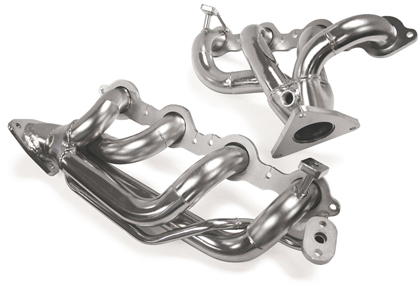
This procedure details installation of Mac headers on a 4th generation car, but the it should be applicable to any manufacturer or generation (except for some of the sensors mentioned.

It's highly suggestable that anyone installing headers buy a good set of 8mm aftermarket plug wires that are designed for extremely high temperatures (e.g. Excel Extreme Heat 9000s) or better yet, have a custom set of Taylor or Jacobs made up which are heat resistant and can be ordered in longer lengths to keep them further away from the headers. You'll want to install the wires at the same time as the headers, not afterwards. Installation afterwards will be more difficult. Also, use stock-type manifold gaskets to replace the originals (e.g. Fel-Pro gaskets). The original gaskets may match up without modification, but they're probably not in good enough shape to reuse. But if the manufacturer suggests using OEM gaskets, that's what should be used. Also, a quality ceramic header coating (e.g. Jet-Hot) is highly suggested. Just make sure they strip off any coating or paint which may already be on the headers.

First, don't do this alone. It's a two person job. Get the front of the car up off the ground as high as you can. Jack stands will get the car up higher than ramps will obviously. Then from underneath the car, remove the driver side oxygen sensor (if one exists). Next remove the y-pipe using WD-40 (or equivalent) to loosen the bolts. It also helps if the engine is warm (not hot). Then remove passenger side oxygen sensor and all of the spark plugs (except #2) to prevent damage during the installation process. Label each plug and wire so you don't lose track of which one goes where. Also, remove the oil dipstick tube which is held to the block by one bolt. Wiggle it back and forth some to get it out. Disconnect the EGR tube from the passenger side exhaust manifold (just one bolt) as well.

Next, from the engine bay, remove the alternator and plug #2. Disconnect the emissions tubes from the driver and passenger side exhaust manifolds (be careful as they are delicate), and then remove exhaust manifolds. Next remove one stock plug wires at a time replacing it an aftermarket plug wire. You can remove the tensioner pulley's wheel to make this easily. Make sure to route the new wires in the exact same manner that the stock ones were.

Trial fit the driver side header (note any plug wires that need to be wire- tied for clearance). With MAC headers, probably only plug wire #5 wire needs to be done. Remove the header and wire tie the driver side as needed. Next reinstall the spark plugs. Install the driver side header using the new gasket. With MAC headers, the driver side is a two piece design due to the steering column. Tighten each bolt as evenly and tight as possible.

Repeat the procedure on the passenger side. Reconnnect the EGR tube to passenger header (remember to reinstall the fastening bolt). Reinstall the oil dip stick. The best way to do this is to have one person above lower the end down and have the other person underneath the car to guide it into place with their fingers. You'll have to wiggle it back and forth to get it back in as it's a snug fit. Remember to reinstall the fastening bolt as well. Reconnect the emission tubes on both headers (remember to place the washers inside the base of the fittings to prevent exhaust leakage). Then reinstall the oxygen sensors. With MAC headers, both of the oxygen sensors are mounted to the headers as opposed to the stock driver side in the y-pipe and passenger side in the exhaust manifold.

Check the wiring around the bottom of the passenger side header. You may need to wire-tie the starter wire and such to keep them from touching the header. Install the y-pipe supplied with the headers. The one that MAC supplies has two screw-in studs for each header to bolt up to the y-pipe and two screw-in studs for the y-pipe to bolt up to the cat. If you're using an off-road cat-pipe which replaces the cat, its easier to have the cat-pipe already mounted onto the y-pipe for easier installation as a whole unit. Be careful not to cross-thread or strip any of bolts when installing them.

Finally, check to make sure you have not left anything disconnected and that everything has been tightened. Start engine and check for any exhaust leaks or for an engine miss. If everythings sounds good, reinstall the alternator, tensioner pulley, and serpentine belt. Lower car and test drive it. If you wire-tied the plug wires properly, you shouldn't have any problems with the plug wires getting burned.

Thanks to Bret Workman (bretwz@one.net).